Showing posts with label China. Show all posts

Wednesday, December 7, 2022

Developmental Pains of Natural Great Powers in the 21st Century That May Finally Restore Balance to the World


Small may be beautiful, but big is powerful. Dog beats a cat, bear beats a wolf, lion beats a leopard, and elephant beats a rhino. And a heavyweight boxer beats a welterweight boxer. Of course, on a pound-for-pound basis, the smaller may be tougher. A cat the size of a dog would destroy the latter instantly. Also, quantity isn’t necessarily quality. Some countries are huge but lacking in fertile soil and/or natural resources. Some countries have large populations but without much discernible aptitude for wealth creation and social organization. And in the world of sports, Jamaica alone produces faster sprinters than China, India, and the White West combined. Arabs and Muslims far outnumber Jews in Israel and possess far more territory and resources but haven’t made much of their advantages. Brazil is a gigantic country with tons of resources but hasn’t lived up to its potential due to its lackluster Latin leadership, diversity & division, and, worst of all, a very large black population(who are equally good at soccer and crime).

That said, World History from the 18th century to the 20th century seemed ‘unnatural’ or imbalanced, in large part due to the rise of certain key nations in the West, especially France, England, and Germany. Spain and Portugal gained a head start in the discovery and exploitation of the New World, but their subsequent fates cohered with the ‘natural’ logic of History, just another chapter in the cycles of rises and declines/falls from the dawn of civilization. It seemed only ‘right’ that such limited kingdoms couldn’t effectively rule over such vast territories across the seas for long. Also, the maddening diversity of Latin America seemed fated for conflict and confusion, a world of wariness and mutual distrust leading to apathy and enervation than unity and morale.

In contrast, Britain, France, and later Germany went from strength to strength, and it was almost as if they’d arrived at the secret formula of eternal greatness, an overcoming of the historical cycle of rises and falls. The supposition held even in the 20th century following the calamitous double whammies of World War I and World War II, after which Europe rebounded quickly and provided living standards superior to any previous period. Even after wholesale destruction of cities and the death of millions, it was as if the Modern West would only move forward and onward. And certain non-Western nations proved adept at emulating the West; Japan was the prime example, rapidly rebuilding following the Pacific War, possibly the biggest calamity in Japanese history.

Just like economists in their search to break free of boom-bust cycles, it was as if the West had been seeking, if only subconsciously, to transcend or at least bypass the Iron Law of the Rise and Fall of Civilizations. The West certainly stumbled upon something because, not only did it avert the declines but kept rising higher and faster even after momentous setbacks, thought at the moment to be the death knell of civilization.
While the West came upon this formula(that broke free from History to make History), the Rest seemed dazed and confused, unable to make heads or tails of the profound changes emanating from the West and utterly clueless as to how to respond to them. China was typical in ignoring the problem and hoping it would just go away. Civilizations that were so accustomed to the rise-and-fall model of history perhaps thought that the West, despite all its dizzying successes, would sooner or later succumb to the historical logic and decline, like all the kingdoms, dynasties, and/or empires. But what happened to Spain and Portugal(and to Greece and Rome long before them) didn’t happen to certain key powers in the West. Also, unlike Spain and Portugal that failed to create viable world powers in Latin America, the Anglos who founded and settled North America laid the foundations of what would become the greatest power the world had ever seen.

If far-seeing space aliens had visited Earth around 1500 A.D., they would likely have bet the future on the consolidation of several great powers: China, Indo-sphere, Russia, Europe, and whoever comes to dominate the Americas, especially North America. China then was obviously a great civilization with deep history, rich culture, lots of talent, and large land mass with considerable resources. Indo-sphere, though to coalesce into a modern ‘nation-state’ only under and via independence from the British Empire, was also well-populated with peoples who made key contributions to the world, not least in spirituality. Russia would have seemed backward then, but the potential was tremendous. Europe, by which we mean Western and Central regions, was a special case.
Europe’s weakness was its strength, and vice versa. Unlike other civilizations, imperial dominance was short-lived, and all of Europe failed to coalesce into one unified state like China. The biggest European empire(post-Roman and west of Russia) with any longevity was the Austro-Hungarian Empire, but it was mostly Austrians ruling over second-rate Slavs and others. Napoleon came closest to forming something like a unified European Empire, but he failed, denying Europe the unity of China, Russia(and the Soviet Union), or the United States. Yet, historians have noted certain advantages in the failure to bring all of Europe under a single authority — conflict bred competition that rewarded innovation in production and military power. At most, unity came at the level of ethno-nationalism, especially with the Germans who united under Prussia; the great tragedy for the Balkan Slavs was the failure to unite as the Germans did, what with Yugoslavia tearing(and being torn) apart after the Cold War; but then, Serbia, the dominant power in Yugoslavia, never gained the prestige and respect of the Prussians. To an extent, the persistent division of Europe owed to deep and genuine ethnic differences, mainly among the Latins, Germanics, and Slavs. But then, even most of the Latin states failed to unite, as was the case with the Germanic peoples and the Slavs, not least because they undermined one other’s efforts at unification. The Latin powers were committed to keeping the Germanic states apart, Germanic powers likewise felt about the Slavic states, and etc. (Even now, consider the sabotaging of Russia’s attempt to revive the Russo-Slavo-sphere in Ukraine.) And there was the influence of Great Britain, the absence of which would have profoundly altered the history of Continental Europe, for better or worse. British priority at all times was to prevent European unity, allying with just about ANY power to maintain the ‘balance of powers’, something which made the British skilled in diplomacy and duplicitous in nature. Very possibly, had Britain never existed, men like Napoleon and Hitler might have succeeded in the political unification of Europe into a kind of federation. If the influence of the Moon has been to stabilize Earth, the influence of Britain was to sow divisions, even chaos, so that Europe could never meld into a united empire. One might argue the EU of late has finally arrived at some kind of unity, but the EU project isn’t about European sovereignty but about vassalage to the Jews who rule the US as the lone superpower. Indeed, the European Union is less about the proud union of European countries than a spineless surrender of Europe to a union with Africa and the Third World under the watchful eyes of the Jewish-controlled US as the master of the Collective West(more like Cuckative West).

Through the 19th century and well into the 20th century, the world witnessed two great trends in political power, one ‘natural’ and the other ‘unnatural’. ‘Natural’ in this case signifies a big country as big power, and ‘unnatural’ a small country as big power(and big country as small power). The rises of Russia and the US as great powers were most ‘natural’ as both entities were vast in resources. Russia had more population than any other European power, and the US had a high birth rate among whites in the 19th century, and there was also what seemed, for a time, like endless immigration from all across Europe. The US clearly outpaced Russia in the 19th century and throughout the 20th century, even following the Russian Revolution(when for a time many intellectuals in the West looked to Russia as the future, especially as the Capitalist West seemed to have fallen into permanent depression), but Russia averted the fate of the Ottoman Empire(even though the calamities it faced in World War I, Bolshevik Revolution & the ensuing civil war, forced collectivization, and World War II were on a scale beyond any tragedy of modern Turkish History). Even though Russia lagged the US and Germany in industrialization and progress, it still managed to advance in key fields. Even with the defeat in World War I, Russia(as the heart of the Soviet Union)managed to industrialize at breakneck pace under Josef Stalin, weathered the storms of World War II, and emerged as a superpower that, for a time, even led in the space race. For all its ups and downs, Russia, whether Tsarist or Communist, did manage to stay in the great power game.

As for the US, the whole world knows the story. Best land, fine lineage of Northern European settlers, and first-rate legacy of the Rule of Law, at least relative to the rest of the world mired in arbitrary and/or mystifying use of power. With all that land and resources, quality of culture and habit, and good genes, what came to be the US arose from a sound foundation, and the mostly European immigrants who followed respected and adopted the Anglo model. So, it was only a matter of time: The US was destined to be a great power without even trying to be. It was a ‘natural’ great power that could easily become a superpower, which it became.
Contra Russia and the US, the other great powers were ‘unnatural’, though hardly unique in history. All through history, peoples of small regions gained in military prowess and began to dominate their neighbors who were far larger in number. Assyrians and Macedonians ruled over vast territories and peoples, and perhaps the most remarkable of its kind in pre-modern times was the Roman Empire, with Persian and Mongol empire as contenders. Ottoman Turks also gained hegemony over vast areas inhabited by non-Turkic folks. The rise of empires in the modern era surpassed the history norm due to the mastery of the wind and seas. European Imperialists went from sea-faring to ocean-crossing and forged the first truly global empires by conquering vast expanses of territory far from the homeland, something unimaginable in the time of the Romans.

At any rate, the ancient Roman Empire and modern British Empire had in common their ‘unnatural’-ness. Of course, it was ‘natural’ that such a well-organized, highly disciplined, and capable people should conquer and dominate others. Still, such empires are built on shaky grounds as, despite all the carrots-and-sticks and ‘inclusive’ magnanimity, there’s always bound to be a sense of resentment among the subject peoples. There’s also the burn-out factor as such an empire can be maintained only with extra, even extraordinary, investment of time and effort as it must rule over vast alien territories and populations. One slip-up, and the whole thing can begin to unravel. Nothing can be taken for granted in such an empire; it was said the sun never sets in the British Empire(and NY is supposedly where no one ever sleeps), and it was a point of pressure as well as pride, as the empire had to be overseen and managed around the clock around the world. The movie BOUNTY shows the iron determination, discipline, and organization necessary to maintain an empire, especially an overseas one as control of the seas demands constant motion of voyages and patrols. It calls for almost inhuman levels of self-restraint and self-denial, as well as hierarchy and power over others. Once such a fire burns out, it’s hard to turn on again. In a way, the movie serves as metaphor for what happened to the Anglo World. Society eventually mutinied against the Old Way and gave itself to revelry and decadence.

Likewise, Jews are incessant in their imperial obsessions because their empire will fall apart the minute the they’re asleep on the job and take things for granted. A Russian can take for granted that Russia belongs to Russians, and an Iranian can that Iran belongs to Iranians. But the current World Jewry, like the British before them, can never take for granted that their hegemony will last if they just took it easy. Such imperial energies can be exhilarating but also exhausting, and it seems the Anglos, like the Romans long before them, reached a burnout point where they simply couldn’t sustain it any longer, especially with the two major wars in Europe.

Imperial authority depends on the clear presence or threat of force, absent which signs of agitation appear among the subject folks. In other words, while Turks continued to accept the authority of diminishing Turkish Power, non-Turks such as Greeks and Armenians saw the fissures as an opportunity to finally regain independence and autonomy. In the 20th century, China went through hard times but remained intact because most people in China were Han Chinese who, despite their disappointments with the inept, corrupt, and/or crazy governments, still accepted the authority invested in leading and representing the Chinese people.

If Russia(and Soviet Union) and the US were ‘natural’ great powers, the other great powers were ‘unnatural’. They were Great Britain, France, Germany, and later Japan. (Ottoman Turks lost out in their desperate gamble in World War I.) China and India were also ‘unnatural’ in that they had the elements to be great powers but faltered as the two Sick Men of Asia. What took shape as ‘India’ under the British Empire was rich in talent, history, and culture but lacked in cohesive will to come together under inspired authority. Things were so pathetic that, prior to the British, the Mughals kicked the Hindus around like dogs and spread Islam far and wide. And China, also rich in history and talent(and considerably bigger than India), failed to meet the challenge of modernity; and if Hindus were ruled by Mughals before the arrival of the British, the Han Chinese were ruled by Manchurian dynasties even to the first decade of the 20th century. One wonders how history would have played out if China had understood the challenges and caught up with the West before imperialism got a foothold in China. China was as much an ‘unnatural’ weak power as Great Britain was an ‘unnatural’ great power.
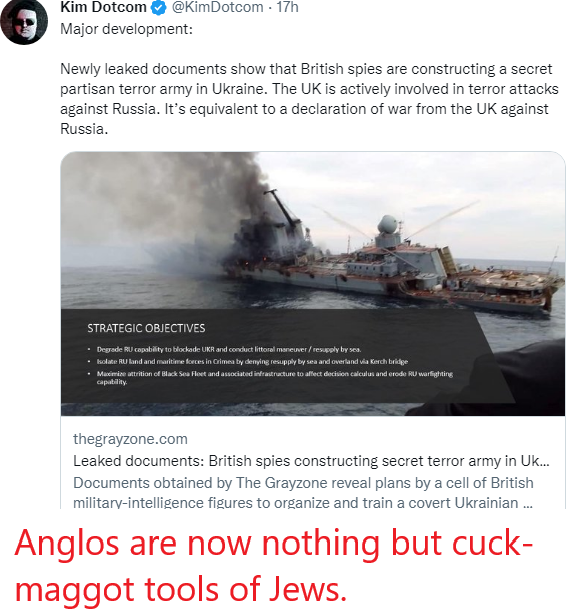
Even though Western/Central European nations are relatively small, the European continent(including European Russia) is bigger than the US. Even without Russia, Europe is two-thirds the size of the US. As a combined power, it’s potential would have been awesome, but it couldn’t overcome the problems of diversity like the US more or less managed to do. The difference is each European nation is deep in history and culture, therefore obliged to preserve and remember what is unique about itself. A true Italian is Italian before (pan)European, and the same goes for a true German and true Hungarian.
In contrast, the US was founded by Anglos who set the template for entry into the US. Those choosing to emigrate had to adopt the American Way as set forth by the Anglos(and fellow Northern Europeans). So, even as the US tolerated and even respected ethnic diversity, the understanding was that YOU are an American before you’re a Pole, Italian, Swede, Irish, Greek, or whatever; furthermore, it was thought that Americanism and the Melting Pot would eventually erase memories and attachments to the Old World. Besides, Anglo-Americans themselves practiced what they preached(sufficiently) by accepting as fellow Americans the non-Anglo-Americans. So, while a Polish-American could have his Polish culture on the side(with kielbasa and sauerkraut), it had to be a secondary feature to Americanism that bound him in a sense of fellow-citizenship with non-Polish Americans.

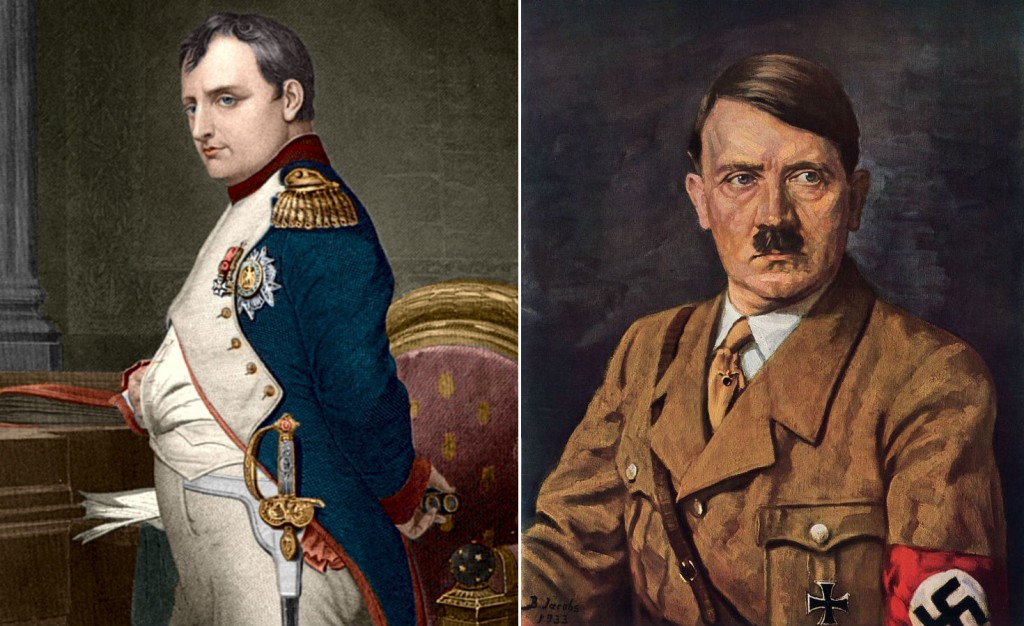
Such a formula was never going to work in Europe because there wasn’t a single or superior formula for being European. An Italian, in simply being Italian, is fully European. He doesn’t have to demote Italian-ness to the periphery to be ‘European’. Whereas Anglo-Americans owned the founders’ rights to the United States in defining the essentials of Americanism, no such authority existed in Europe. Even when some figures came close, as with Napoleon and Hitler, it was unity by conquest than by free will, the choice of immigrants voluntarily choosing and pledging to become ‘Americans’ above all. Immigrants were joining and participating in the Anglo American conquest of the New World that rubbed out the Indians to make way for the Europeans of all stripes under the stewardship of Anglo-Americans. Because European chances at unity, usually short-lived, came by the way of conquest and coercion, they deteriorated sooner than later when the imperial power diminished or was defeated, the fate of Napoleon’s France and Hitler’s Germany.
Europe was united by certain themes, especially the Greco-Roman, but these were a matter of cultural authority than political-military authority. Whereas immigrants to the US were well aware of the political, economic, and military might of the Anglo-Americans who controlled the levers of power, all that was left of the great Greek and Roman civilizations was their legacy; if anything, modern Greece and Italy were thought of as jokes.

There was the shared faith in Christianity, but it was as divisive as unifying, especially due to Europe being divided along Orthodox, Catholic, and Protestant lines. Religious differences even scarred those within the same nation or similar ethnicities. The Catholic-vs-Protestant strife in Northern Ireland is a famous example. Poles and Czechs, part of the Slavic folks, became further estranged from Eastern Slavs due to their Catholicism, a tension that also played out in Yugoslavia with Catholic Croatians duking it out with Orthodox Serbians, and with both of them duking it out with Slavs who’d converted to Islam in Bosnia. (Unification of Germany overcame the Protestant-Catholic difference, but the tragedy of Yugoslavia was the bridge the religious and cultural gaps through a sense of shared blood and history.)

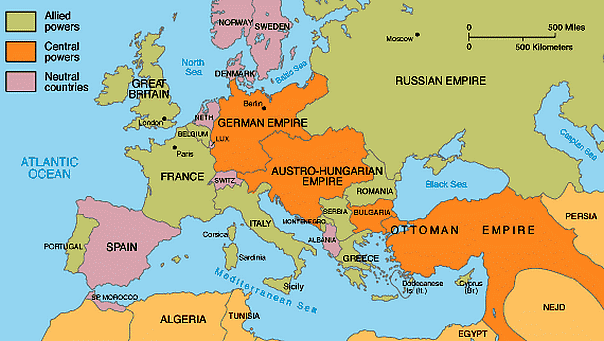
In the pre-World-War-I years of the 20th Century, the world power arrangement seemed thus: The US, a great power, destined to become a greater power. Russia, an underachiever but still a great power on the move. Great Britain, the premier great power around the world, ruler of one-fourth of the globe. France, the second great European power after Britain. Germany, a rising power overtaking Great Britain in industry. Japan, rising rapidly as a great power in Asia.
In Europe, the main source of tension was between the two ‘unnatural’ powers, the established one, Great Britain, and the rising one, Germany. The British had come to terms with the French as a worthy competitor — Britain usually got the first pickings while French got the second-round picks. Two could be company, but three seemed a crowd. Besides, whereas Britain regarded semi-industrial France(40% of whose population was rural after WWII) as a perennial second runner in the economic front, it nervously eyed Germany as a power that could overtake the British Empire(a foolish fear as Germany only wanted its ‘rightful’ share of the world). This all came to a head in the events that led to World War I. If not for the British, Germany could have ended the war in a year, defeating both Russia and France. Far fewer lives would have been lost, and Germany would have been the dominant power on the Continent. Defeat was tragic for Germany, but it had a second chance at world power status under Adolf Hitler but, once again, Britain was instrumental in preventing German victory. (Given Hitler’s pathologies, British machinations in World War II were more justified than in World War I; indeed, one wonders if the UK and USSR would have gained much moral advantage in the 20th century if not for Hitler, against whom the British painted themselves as defenders of the free world when, in fact, they were the biggest imperialists in the world; and Soviet totalitarianism was redeemed in the eyes of many by its victory over Nazi imperialism, without which Soviet Union would have been remembered as the most murderous power in the 20th century. Even today, despite all the bad blood between the UK and Russia, their national self-perception revolves around the war with Nazi Germany.) World War II finished Germany as a world power for good. Thereafter, it recovered as the economic powerhouse of Europe but lost all rights of sovereignty, independence, and pride.
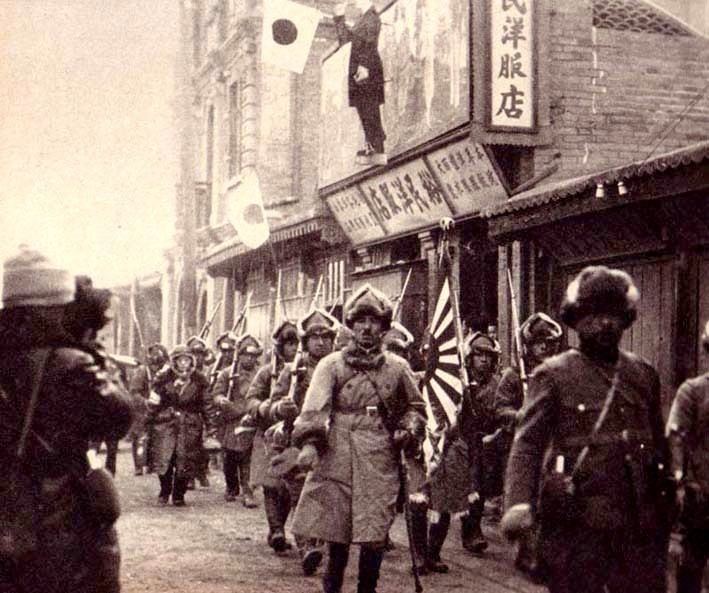
Japan’s problem stemmed from being a rising ‘unnatural’ power at odds with an ‘unnatural’ weakling, which was China. Had Japan and China modernized around the same time, there would likely have been far less tension between the two civilizations. Modernizing China, being bigger and more populous, would have been stronger than modernizing Japan, and the Japanese would have accepted this reality. But as Japan modernized first and faster while China lagged for reasons domestic and foreign, Japan joined the other imperialist powers in targeting China as the Sick Man of Asia(or the Whore of Asia) to carve up. This would have grave consequences for Japan-China relations that linger to the present(and seems to be getting worse as Japan is now part of the Neocon US satellite). China failed to modernize before the West got a foothold and forced concessions, and then, Japan exploited the weakness as well. Japan first grabbed Taiwan, but it was Manchuria that would poison relations and lead China and Japan on a warpath of utter devastation. Just like Jews now use Ukraine against Russia, Japan used Manchuria against China. Japanese ‘benevolence’ claimed to honor and defend Manchurian independence and nationalism against Chinese belligerence when, in fact, the Japanese planned to turn Manchuria into another Korea, a Japanese colony, at best a puppet state. While Manchurians had once been a separate ethnic group, their long rule over all of China dissolved many of the national and cultural barriers between the two worlds. Still, the nationalist movement in China did curse out the Manchu rule and reasserted Han Chinese sovereignty as the forerunner to driving out rest of the imperialists, and the Japanese took advantage of this China-Manchu tension, except that many Manchurians didn’t buy the Japanese line at all, and it was only a matter of time before China would demand Manchuria back, and this all came to the fore when, following the Xian Incident, Chiang Kai-Shek changed his policy of finishing off the communists first before tackling the Japanese threat.

Incredibly to the Chinese, Chiang made a national front alliance with Mao against Japan. This meant Japan would have to defend Manchuria in a forever war with China, which would only grow stronger in time. Or, Japan could go on the offensive, punish the Chinese, grab a bigger chunk of northern China, and force the Chinese to accept Japanese rule over Manchuria and whatever else they conquered. Japan chose offense than defense, but this led to unforeseen consequences beginning with the US sanctions under FDR, who promised to resume the sale of iron and oil only if Japanese withdrew back to Manchuria. In retrospect, Japan should have taken the deal, but doing so would have been construed as Japanese defeat at the hands of China, the Sick Man of Asia. The world media would have said, “Proud and brave Chinese fend off the Japanese attack; Jappers run back to their base in Manchuria with tails between their legs.” Without US iron and oil, Japan figured the only way to secure resources was to take southeast Asia where the European imperialists had developed various extractive industries, but an open war with white nations could mean a confrontation with White America, then still an awesomely race-ist country. And the rest is history. Japan lost in the most catastrophic manner and gone for good was its global ambitions. Its economy under the US empire grew faster and larger than ever, but politically and militarily, it’s been a whore-geisha to Uncle Sam, now Uncle Shem.
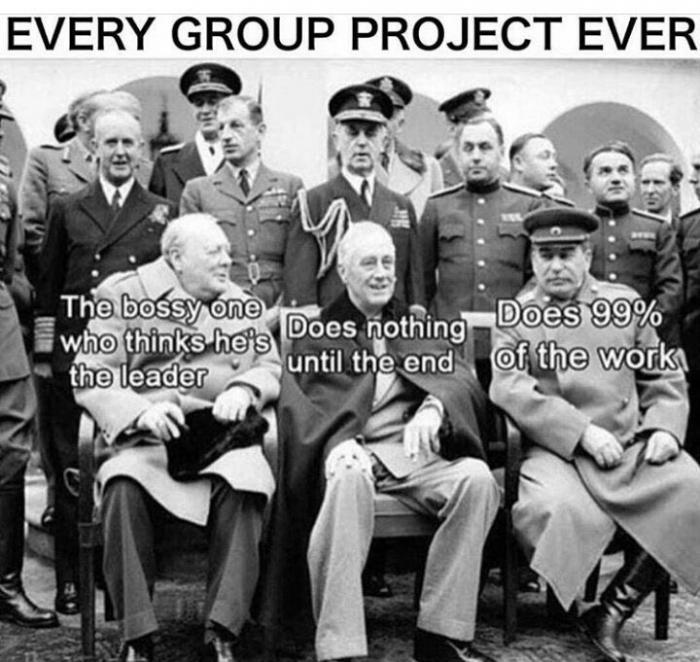
So, after World War II, the two ‘unnatural’ powers Japan and Germany were out. They were allowed to prosper as whores of the US, but they lacked anything like national pride and autonomy. Germany and Japan built and designed things but had no control over their own destinies, let alone those of the world.
Then, soon followed the demise of two other ‘unnatural’ powers, Great Britain and France, what with their outmoded justification for world domination, especially when Democracy, Nationalism, Communism, and Post World-War-II Narrative all rebuked old-style imperialism. Democracy was about people freely choosing their representatives and leaders. Nationalism was about national sovereignty for each people. Communism was about spreading the Marxist formula of social justice around the world, and it conflated capitalism with imperialism. And the Post-World-War-II Narrative held that the West was morally superior for having resisted and defeated the world-conquering imperialism of the Evil Nazis and the ‘Japs’, and increasingly, ‘racism’ made the Holocaust the centerpiece of World War II Narrative.

Then, it’s no wonder the British, the French, and other European Imperialists found themselves on the moral defensive for their rule over their non-European colonies, especially as their economies were drained by the war & reconstruction and challenged by various nationalist resistance movements that were either tacitly supported by the US or aggressively championed by the Soviet Union. The Soviet Empire was very much an empire but justified as an anti-imperialist imperialism, or an empire in which everyone was a comrade of equal worth and dignity. Unlike British privilege over the darkies, there was no Russian privilege over non-Russians in the empire, i.e. Russia was the main body than the mastermind of the Soviet Empire that came into being under the leadership of men of diverse ethnic backgrounds.

So, in a way, the US vs USSR, aka the Cold War, was more ‘natural’ following the defeat and/or demise of the ‘unnatural’ powers. In due course, Great Britain, France, and of course, Germany and Japan learned to live within their limitations. Their unstable empires over vast numbers of foreigners couldn’t last forever. In contrast, the US and the Soviet Union were empire-sized political orders. However, world affairs were still not in a ‘natural’ state of balance as China and India through most of the 20th century remained hopelessly backward or in a state of perpetual crisis. It was only in the final decades of the 20th century that China and India began to make their move toward achieving something like their true potential. Finally, only under Deng Xiaoping did China have a stable leadership that was open-minded and rational enough to make pragmatic than dogmatic decisions, not least based on the modernization of East Asian nations, especially Singapore. And true economic liberalization came to India only in the 1990s. The globalization of the Western Economy based on seeking the most cost-effective means of production and services not only did wonders for urban Western elites but for manufacturing in China and the tech boom in India; and with their growth, China and India began to diversify their economies from excessive dependence on Western(and especially US) demands.

In the last quarter of the 20th century, there was much focus on the G-7 countries, which seemed both right and wrong. Right because those were indeed the top economies in the world but wrong because it ignored so much of the world. When G-7 was born, the world remained divided by the Cold War, and China and India were still economic basket-cases despite their vast populations. In the 21st century, the prestige of the G-7 has been slipping(and may one day seem quaint if current trends continue). Not only have Japan and Western Europe been fading, but Japan(along with the East Asian Pussies) face steep demographic decline, whereas Western Europe and Canada are effectively being erased racially and culturally by Third World newcomers; and what with all the anti-white cult in the media and academia, not least ‘educated’ whites themselves, even elite positions are being opened up to nonwhite usurpers handpicked to be the New Cucks of the Empire of Judea. Incredibly, the ‘conservative’ Tory Party of the UK now takes pride in marginalizing native white British males for top positions while bending over for the globo-homo ‘gay’ dong up the bung. In the future,the G-7 may go the way of the aristocracy.
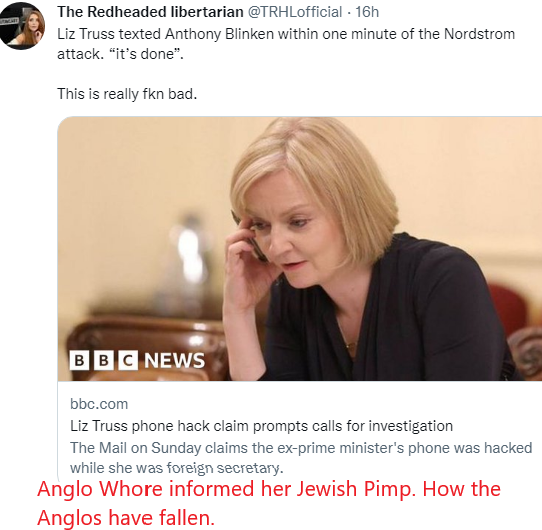
In the 21st century, we are finally witnessing the emergence of what better resembles a ‘natural’ world order. The US with its vast resources and large population remains the lone superpower. Russia, with its considerable population, vast resources, and some degree of aptitude, has re-emerged from the post-communist crisis-period as a power to acknowledge. China has rapidly grown into an industrial powerhouse and is expanding its military power. India, once written off as a joke, still faces epic challenges, some of them seemingly insurmountable, but it too is taking shape as a genuine power, at the very least as a country that can’t be pushed around. (Of course, it seems the Hindus are playing a clever game. On the one hand, work with Jews, who control the West, to gain greater access to and leverage over globalist institutions while, at the same time, operating from the perspective of national sovereignty to make India more or less immune to globalist pressures, e.g. refusing to go along with Jewish-decreed Western Sanctions against Russia.) If current trends continue, the future will belong to the ‘natural’ powers, big in size, population, and talent, whereas the former ‘unnatural’ powers shall never reclaim their great power status. No chance of France taking back entire swaths of Africa and Asia. The idea of the UK re-colonizing India or taking back Hong Kong is now a joke. If anything, it seems globalist Indians are colonizing Britain, which is depressing, but at this point, who the hell cares as the Anglos have degenerated into the most pathetic bootlicking and brownnosing cuck-maggot-collaborators of the Jews. Even Anglo cultural influence has been degraded over the years. Britain once gave the world the Beatles and James Bond. Now, it’s Harry Potter and the cult of Princess Diana. (In the past, British actors took pride in playing British characters but now mainly seek relevance by playing Americans.)

Of course, size and population alone don’t guarantee great power status. A Brazil filled with Germans would be a superpower overnight, but it has too many corrupt Latins and too many blacks. Indonesia has a large population and vast resources in its many islands, but the native population is pretty lackluster and are unlikely to amount to much. Indeed, what would the Southeast Asian economy be without the overseas Chinese?

Among all the contenders of future greatness, India is the most interesting case as it has some of the biggest extremes in exceptional talent and mind-boggling ineptitude. A high-tech giant where half the population still shit outdoors. On the other hand, Hindus are, along with Jews, the ONLY people in the world with a spirit and culture powerful enough to withstand the pressures of globalism. For example, whereas Chinese outside China soon lose their sense of Chinese-ness, Hindus outside India still know what they are. Class is more easily deracinating than caste.

Can the emergence of a ‘natural’ world order proceed peacefully? Currently, the US is the lone superpower. China is a great power, along with Russia. India is making heady progress in various areas and asserting its own course of action(to the ire of the US and UK). The lesser but important powers like Iran are also gaining in prominence and despite the crippling sanctions by the West. At this point, it seems most of the world, especially in the ‘Global South’, is ready and willing to accept the rise of a new world order(not to be confused with NWO of Bush and the Neocons) where nations with the potential to be powerful are indeed becoming just that. And in the rise of the ‘natural’ giants, the chance of any ‘unnatural’ power to gain world dominance is unlikely. (Of course, Jewish Power is the most ‘unnatural’ as Jews don’t even have a sizable nation of their own. Israel is very small. Yet, in an odd way, Jewish Power is also the most ‘natural’ as power is centered in elite institutions, and Jews have silently seized and captured those key areas in the West. After all, invisible germs can take over entire organisms.)
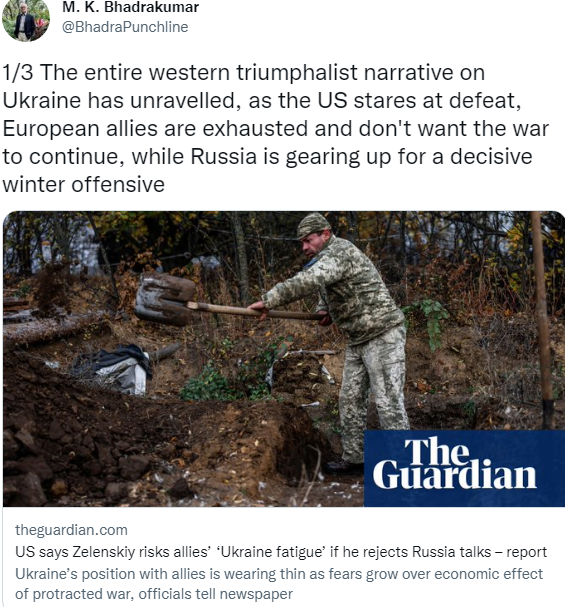
This poses a problem for the US as the lone superpower. In the 1980s, there was much talk of Japan’s emergence as the economic behemoth(destined to overtake even the US). Despite its political subservience to the US empire, Japan was still regarded as an economic superpower. However, the US always knew that, when push comes to shove, it could pull the plug on Japan, a nation so utterly dependent on the US control of the world in terms of trade routes, markets, resources, and ‘protection’(actually an extortion racket). In contrast, the Collective West is realizing with the Ukraine Crisis that the rug cannot be so easily pulled from under Russia that can feed itself and has bountiful resources. Furthermore, the sanctions are compelling Russia to develop its own domestic industries in key areas or lean to the ‘Global South’ and China for supplies. So, even as Germany and Japan were deemed economic powerhouses with their rapid recoveries from the rubble of World War II, they could always be undone overnight by the US, just like the Jews could turn Kanye West from a multi-billionaire to a mere millionaire almost overnight.

But as Russia, China, and India rise(and furthermore increase trade and act on mutual interests in the vast territories of Eurasia), the US is far more limited in what it can do. The US can’t do to them what Jews did to Kanye West.

Whatever tensions exist between China and India, it’s over slivers of territory than world domination. Also, both nations have come to appreciate the benefits of close ties to Russia that has too few people for too many resources. Furthermore, neither Russia, China, nor India wants to dictate to one another about ‘values’, unlike the US that prides itself as the ‘exceptional nation’ with some divine right to preach to the rest, which is kind of weird given that ‘wokeness’ obsesses so much on the ‘great evils’ of the American Past/Present and Western History; but then, white moral arrogance paradoxically stems from white self-flagellation, i.e. “We whites are in a position to preach to the rest of you because we’ve been redeemed at least in part by prostrating before the holy trinity of Jews, Negroes, and Homos, the most sacred peoples that ever lived”, or “Because I repent for my white guilt about Emmett Till, I have the moral justification to hate China”, or “Because I take the knee to George Floyd and wash stinky Negro feet, I’m justified in painting bombs with BLM and drop them on hapless Arabs”, or “Because I’m so sorry for the ‘homophobic’ sins of the West, I’ve earned the moral credit to nuke Moscow.”

In the end, war or peace will be up to the US. Is the US willing to accommodate the rising great powers and live with them in peace and mutual respect? Or will the US insist on remaining the lone superpower on both the military and ‘moral’ level(as plenty of Americans think they are ‘more evolved’ because they associate homo fecal-penetration with the ‘rainbow’). Of course, it’s all the more problematic because the US is ruled by Zionic Jews who are by nature supremacist.

Interestingly enough, the fact that Anglo-Americans and Christian Whites submitted to Jewish Power suggests that they aren’t so obessively supremacist. If indeed white Christians were pathologically committed to supremacism, why would they have allowed Jews to gain power over them? It seems many white Christians, including the elites, were perfectly willing to share power with Jews after World War II. However, they miscalculated because Jews were never content with mere power-sharing on an equal basis. Jews lusted after total domination, control, and supremacy. Incredibly, white Christians caved to Jewish demands. And in the current UK, it seems white Britons are even willing to bow down to Hindus and the like. Thus, based on the evidence of white attitudes, it seems a white Christian-ruled America could make peace with a new world order of ‘natural’ great powers, i.e. the US could learn to live in peace and on friendly terms with Russia, China, India, and even Iran(in a ‘let bygones be bygones’ sort of way).
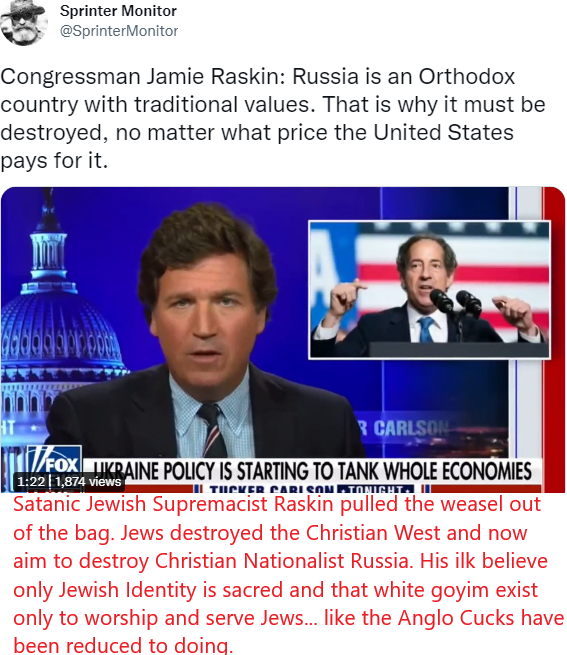
The reason why the current US cannot accept such an outcome is because of the Jewish Factor and mainly for two reasons. Not only is Jewishness innately the most supremacist consciousness in the world but Jewish Power, the greatest power that ever was, is actually built on sand. It is not based on and rooted firmly in the soil. Rich or poor, strong or weak, China is about Chinese people on Chinese land as their base. Russia is about Russian people owning Russian lands. Indeed, the history of Bolshevism shows that the national majority can reassert its authority in time. In the 1990s, Jews ran much of Russia(mostly into the ground), but they were too few, and when a man like Vladimir Putin emerged, he was supported by the vast majority of Russians. India is something of an ethnic and cultural mess, but an indisputable sense of Indian nationality has developed and taken root. Besides, over 90% of Indians are Hindu, and Hinduism isn’t just a religion but an ethnic identity.

In contrast, the Jews who rule the world(via the US as lone superpower) may have more wealth and power than Russia, China, and India combined, BUT they are ‘alien’ elite overlords over vast numbers of goyim. Only in Israel are Jews the solid majority, but Israel is a tiny speck on the map, and its survival and power depends on the favoritism and protection of the West that is now under Jewish control. Thus, Jewish Power isn’t based on something that they can take for granted. Chinese leaders, whoever they may be, can at least rest assured that they are Chinese ruling over vast numbers of Chinese. For all the unrest and turmoil that may grip China, there’s the sense that the Chinese people will only accept other Chinese as legitimate rulers over them.
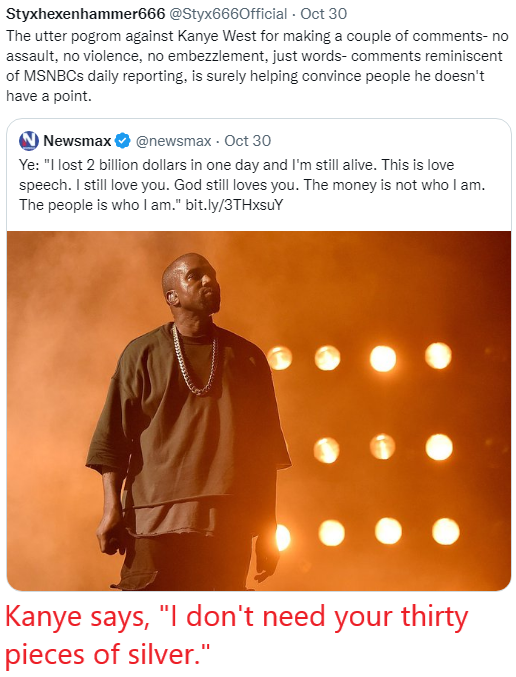
But, for how long can Jews rely on goy support in the West? What if the goyim go ‘Kanye West’ and begin to ask questions and challenge Jewish Power? It’s no wonder Jews work so hard to invalidate, discredit, shame, and impugn the very notion of whiteness. That way, whites will be too guilt-ridden, ashamed, and self-loathing to unite and work for white interests. Also, whites will look to the sacrosanct forever-holocaust Jews(and blacks and homos) for moral guidance and do as told. With whites under their command, Jews can maintain their position as the rulers of the US as the lone superpower and direct the West’s forces against perceived foes and rivals, like Russia, Iran, and increasingly China, which has infuriated Jews for its ties with Russia.

But then, one wonders if Jews are creating for themselves a two-front war. Sure, all the white-bashing may lead to more white apologetics, cuckery, and submission, but there is also the chance that whites may say, “this is just about enough” and turn against the Jews, in which case Jews(and homos and cuck whites) will have to face Russia, China, and Iran on one side while facing White Rage politics on the other. If you beat a horse hard enough, there’s the chance that it may kick you, smashing your skull to pieces.

The transition of the world to a system molded by several great ‘natural’ powers can be peaceful as the examples of China, Russia, and India have shown. None of them seeks world domination nor has the messianic impulse. China and Russia were in messianic mode only under communism, but that ship has long passed. India knows that its defining culture, Hinduism, isn’t for export. What all three great countries have in common is seeking mutual interest by trade.

In contrast, the US seems hell-bent on dominating, reshaping, and leading the world. This impulse seems to stem from various sources. There is the legacy of Anglo Imperialism, which passed from Britain to the US, even though the latter masked its dream of empire in ‘progressive’ piety of ‘liberty’ and ‘democracy’. There is the Protestant missionary impulse, the idea that the US is a City on a Hill, an exceptional nation, a beacon of light for all the world. There is the hyper-capitalist drive, one not merely of commodities and goods but popular culture as the new religion: Coca Cola as the new holy water, Hollywood as the new vatican, and Rock/Rap as the new gospel.
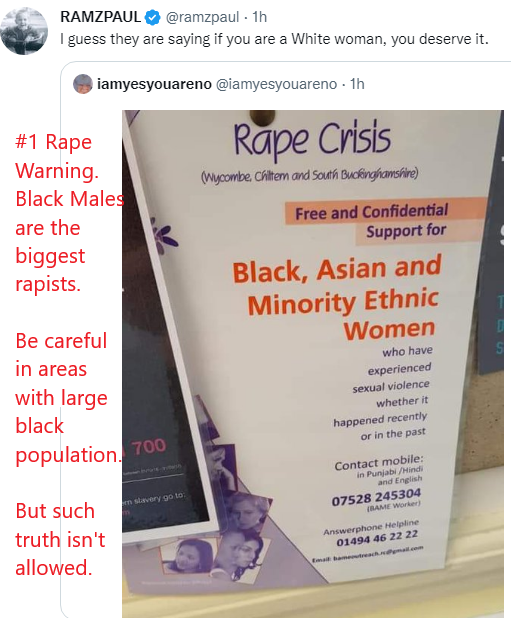
Given the conceit of America’s founding as a bold new experiment, there’s less in history and deep culture that Americans can boast of; rather, American pride comes from the obsession with Something New as the leader in fads and fashions. There is also the sports culture, especially because of blacks. Blacks, being the best athletes, made the US the powerhouse in global sports. American blacks outran, out-jumped, and out-fought the other peoples around the world, and blacks are naturally into showboating and blinging their championships. A kind of Black-American athletic imperialism has been approved by the world community, not least because black champions aren’t necessarily seen as expressions of black arrogance and supremacism but as the triumph of the underdog after a couple of centuries of picking cotton and being called ‘nigger’. (In truth, blacks were never underdogs in speed and strength, and Jack Johnson and Muhammad Ali’s destructions of white boxers were really the natural results of black over-dog-ism in athletic prowess.)

Of course, blacks have the support of Jews who intend to use the black song-dong-strong formula as instruments of world control. Jews want every non-black nation to take in blacks, have blacks take over the national sports and be idolized as the ‘national’ heroes(as has happened all across Europe and in Japan as well), thereby subverting the representative native face of the nation. Consider the French soccer team that is nearly all black. To the extent that athletes are, rightly or wrongly, seen as ‘national heroes’, such a shift has had a profound impact on French self-image and national identity.
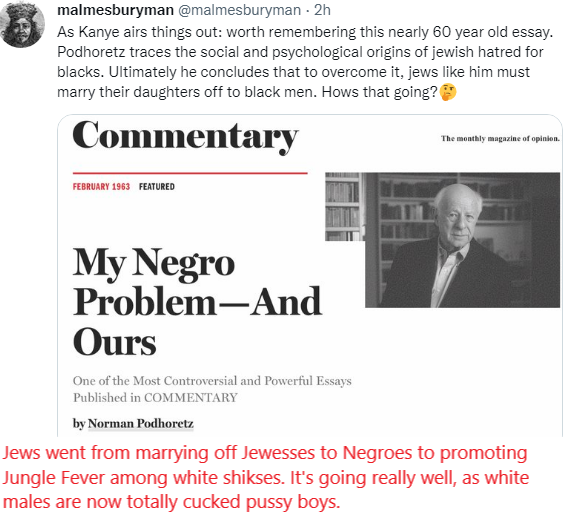
And there are also the homos, even a closer ally of the Jews. Indeed, the Jewish use of Globo-Homo gives the game away as to their real designs. Jews well know that the Globo-Homo agenda is designed to undermine and degrade any politics of sovereignty among the nations of the world. This is where Jews are most different from Russians, Chinese, Indians, Iranians, and etc. Russians don’t mind other nations being ruled by their own representatives of the majorities with their unique national interests. So, despite all the tensions between Russia and Turkey, not least because Erdogan is such a skunk, Russia has no problem with Turkey being about Turkish pride, history, culture, and interests. And whatever bad feelings some Turks may have about Russians, at the very minimum they understand Russia is Russia and has its own unique interests and concerns. And this consideration applies to China, India, Iran, and etc. Iran isn’t trying to turn China into a Shia Muslim country, and Chinese couldn’t care less if Iranians never read a book on Confucius or Mao. It’s all a matter of national sovereignty.
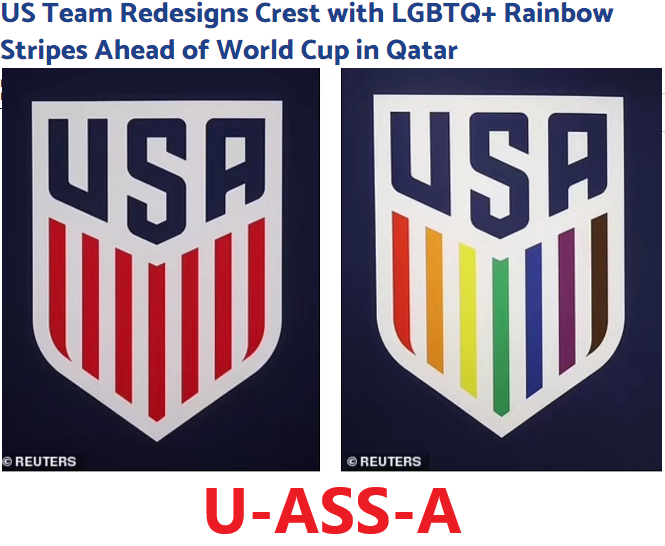
But such an outlook and approach don’t sit well with Jews. Why are Jews so allergic to any notion of goy national sovereignty? They pretty much destroyed it in the Collective West and are working to undermine it in Latin America, Japan, and the East Asian Pussies(aka Asian Tigers but they’re more like pussy cats). It’s because acknowledging such sovereignty in non-Western countries implies that it should also apply to countries that Jewish minority elites rule over. If Chinese sovereignty is about the Chinese being ruled by fellow Chinese, the kind of leaders that the great majority of the population identify with(and the same logic applies to Russia, Iran, Turkey, Arab nations, and etc.), then why should the nations of the West be any different? Why shouldn’t all Western nations be like Hungary where the overwhelming Hungarian majority have voted in elections for pro-Hungarian leaders who represent Hungarian nationhood, history, heritage, and territoriality? If Russian leaders represent the solid majority of Russia, if Turkish leaders represent the solid majority of Turkey, if Chinese leaders represent the solid majority of China, and if Iranian leaders represent the Iranian population, it would seem such is the norm around the world, a matter of national rights or sovereignty.

But if such a principle were validated in the West(as in Hungary, one of the few exceptions to the current ‘Western’ rule), what would it portend for Jewish Supremacist Power? What would happen to the George-Soroses of the World whose tentacles have reached into every crevice of Western law, finance, media, and deep state? It could very well mean the end of Jewish Supremacism.
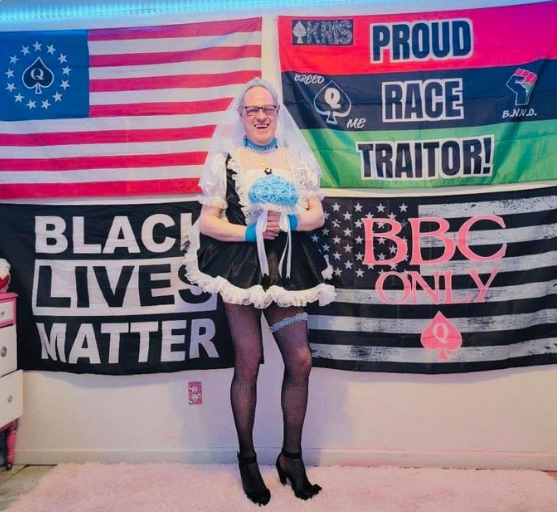
And that is precisely why Jews employ Globo-Homo as the joker up their sleeve. Jews cultivate, fund, and promote homos in every country and also indoctrinate the non-Western elites and their children as to the magical wonders of globo-homo, which is associated with Western power, privilege, connections, wealth, celebrity, creativity, and etc. In other words, to be allowed INTO the globalist glitz club, one has to fully take ‘communion’ with Gay Rites.

Now, what happens when the elites of a country imitate the West in showering praise and protection for homos(and trannies) as a special people and, furthermore, when those very homos are fawned upon by Jews who rule the West and also monopolize ‘spiritual’ authority? It means the country is no longer ruled by true patriots who represent the needs, values, and the will of the national majority. It means the elites, ever so status-conscious and beholden to Western Standards, will always favor the vanity-politics of homos who, feeling alienated from the majority ‘homophobic’ population while being so grateful to World Jewry that made them the new darlings and princelings of the world, will do the bidding of Jews whose ultimate agenda is to subvert and weaken every goy nation for Jewish takeover. It’s like an octopus injects enzymes into crabs to soften the meat inside, which turns to goo, which is then sucked up by the octopus, rather like what the Jewish-like space aliens do to earthlings in the sci-fi film UNDER THE SKIN.

Because Jews rule the West and push globo-homo to secure world control, the 21st century may not witness a peaceful transition to the new order of great ‘natural’ powers. Without Jews, the West may accept the new ‘natural’ order. After all, Europeans gave up their empires and made peace with the new reality after World War II. And if not for Jewish-led US pressures, it’s likely Germany and Russia would have already sealed the deal on Russian gas for German goods. Even globalists like Angela Merkel were looking to work with Putin’s Russia even after the 2014 fiasco in Ukraine, but the US threw one monkey wrench after another into Russian-German relations. But why? Because of the legacy of Anglo imperialism? In part, perhaps, but the real reason is Jewish Power that is waging war on all sovereignties… except of course in Israel. Today, most Western ‘leaders’ are puppets of Jews much like Warsaw Pact leaders were puppets of the Soviet Union during the Cold War.
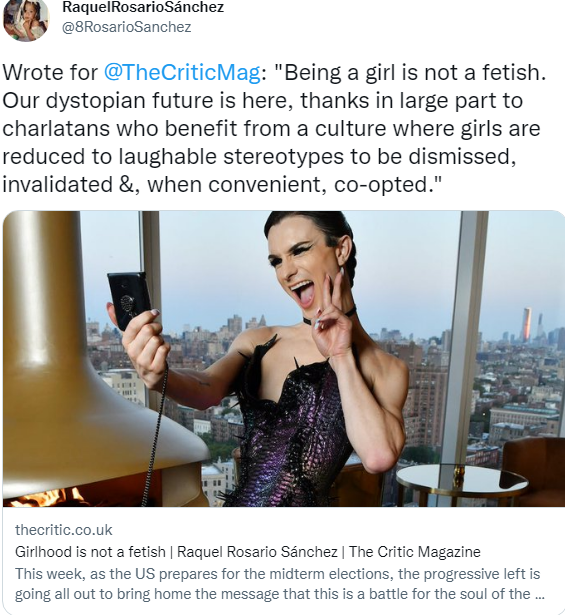
One of the biggest contradictions in the world is the quality/quantity deficit neurosis among Jews. Jews believe themselves to be the Chosen or the Superior, yet the only majority Jewish country is Israel, a tiny piece of the world. Perhaps, Jews would be less neurotic about world control if they had a country of their own the size of Brazil or India. They might feel that they, as a great people, have a great chunk of territory to call their own. But as things stand, Jews who regard themselves as the best of the best have only a sliver of land as the Jewish State.

As a Euro-Semitic people, Jews could easily identify with the ‘Aryans’ of the West or the ‘Semites’ of the Near East(the Arabs and the like), but Jews opted to set themselves apart from both. This led to a powerful identity and a strong sense of tribalism and cohesiveness, but it also meant an exclusionary outlook on the world, i.e. most of goyim were not good enough to be Jewish, and the ones with superior qualities in looks or intelligence were married into the Jewish tribe and their children were raised as Jews. Thus, Jews were bound to be numerically disadvantaged and persist as minorities in goy majority lands.

By superior wit and cunning(along with sheer chutzpah, which made for steely will combined with strategic flexibility), Jews could gain influence and even domination over goyim, but the countries were still defined by majority goyim, which means Jews were, at best, ‘guests’. Jews may have run circles around ‘Dumb Polacks’ in Poland, but Poland still belonged to the Poles. Jews have gained tremendous leverage over Ukraine(as a Jewish Gangster Paradise), but it’s still known as Ukraine, not Jewkraine.

The very exclusive nature of Judaism limited the number of Jews. Jews could be European or Semitic, but goy Europeans and goy Semites(such as Palestinians) could not be Jewish. If Jews accepted their numerical limitations and its implications, things would have been fine. But even as Jews exclude the world in Jewish identity and community, they demand that the world open up to and be owned by Jews. It’s like someone who never invites you to dinner but always demanding to be invited to your dinners. It’s like someone who would never let you do his wife but always demands that he do your wife.

Since Jews cannot overtly lay claim to goy countries, they’ve devised other means to gain control. A lot of it has to do with financial manipulation. Jews may not officially own the country(in the way that Israel is said to be a Jewish State), but they can become the financial masters and control much of the economy, pulling the strings directly or indirectly, as the financial sector makes the rules of where the money goes.

Indeed, it was through finance that Jews came to control much of the world, and Jews thought their power was ironclad until they recently bumped against Russia and other countries with their control of commodities. The other ways of Jewish control has been ‘spiritual’ and idolatrous. Via the Holocaust Cult, Jews have pretty much converted Western ‘souls’(as holes) to Jew Worship. And through the idolatry of BLM and Globo-Homo, countless goyim around the world have been converted to believing that their worth is to be measured by how cucked they are to Negroes and Homos.

Still, there’s nothing like the security of land. Land is real. It is tangible, the ground under your feet, the soil from which food grows, where oil is found, where minerals are mined, where your ancestors are buried. In contrast, no matter how much financial and ‘spiritual’ power Jews may gain over others, Jewish Power is utterly dependent on the complex networks and systems of control. Even when the political system broke down in Russia, Russia was the reality on which Russians lived. Rich or poor, Russians owned Russia as their homeland. In contrast, financial power can vanish overnight if the system breaks down. It’s based on legality and contracts, or connections and controls. When Jews lost oligarchic power over Russia, the country reverted to Mother Russia from Whore Russia. As for ‘spirituality’, it too can vanish into the thin air when the narratives change and paradigms shift. Gods, demons, and angels are all in the mind, and it’s very possible that the world will wake up and reject Globo-Homo as a sick and disgusting Jewish Power Play. Then, in an instant, Jewish Power over so much of the world just goes ‘poof’ in the air.
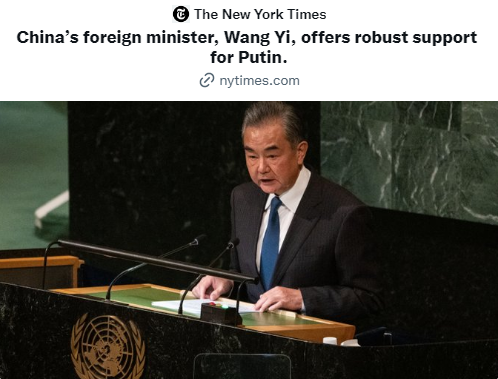
Russia and China in the Scales of Modern History and the Uncertain Future


Russia and China are in the news lately for obvious reasons. During the Cold War, Russia, as the core of the Soviet Union, posed the greatest challenge to US hegemony(or the greatest threat to the Free World, depending on one’s perspective). And China, though backward, represented leadership in the Third World’s challenge to both US capitalism and Soviet Revisionism. But beginning with Nixon’s meeting with Mao and culminating with new policies under Jimmy Carter and Deng Xiaoping, China moved into the US orbit, at least geo-politically. Both would cooperate against Soviet influence and even jointly aid remnants of the Khmer Rouge against Vietnamese occupation of Cambodia. And both, especially as allies of Pakistan, were eager to see Soviet Union fail in Afghanistan. And then, following the reforms and peace treaties(between Ronald Reagan and Mikhail Gorbachev), the Warsaw Pact dissolved and Eastern European nations ran into the arms of the West, and the Soviet system was soon to collapse, leaving the US as the undisputed and unchallenged superpower not only militarily and economically but culturally and morally.

Of course, at the time of these momentous events, Western Europe was still recognizably overwhelmingly European and felt no shame about its ethnic or racial composition. Most people couldn’t imagine the likelihood of ‘gay marriage’ and Christianity degenerating into an idolatry of homo anus to lick, black feet to wash, and Jewish ass to kiss. If anything, Eastern Europeans who finally broke free of communist shackles probably felt liberated from the ‘Oriental Despotic’ yoke of the ‘mongoloid’ Russkies. At the time, they had no way of knowing that the New Western Values would be about ‘Diversity’, the Great Replacement(or White Nakba), cuckery, globo-homo, Negrolatry, and abandonment of civil liberties & individual freedoms to appease Jewish Power gone supremacist mad.

This was around the time when Francis Fukuyama proclaimed the End of History in an intellectual essay. Though now remembered mostly as a Neocon flunky(though he did infuriate Neocons when he disavowed the Iraq debacle), he probably didn’t write in flunky mode when the Berlin Wall came tumbling down, not least because Neocons had yet consolidated their power over American Conservatism and revealed their true face as ruthless Jewish Supremacists, whereupon free thinker(albeit a naive one) Fukuyama essentially became the flunky ‘Fukyomama’.

At the time of the Berlin Wall’s fall, the US was truly at its height. The only nation touted as a potential challenger was Japan, one of the most dynamic economies of the Eighties that seemed to be dominating not only autos and electronics but computers. But even if the Japanese economy had overcome its looming problems and continued to grow apace, it was far too geo-politically limited to become a dominant world player.

As for China, the hopeful view among the American elites was that it would be taken over by Hong Kong than vice versa, not least because Chinese students were so awed by all-things-western in the Eighties. Indeed, it was incredible that, just around the time the Soviet system was on its last legs, the Chinese government was met with the greatest challenge to its authority since the establishment of CCP rule. In one decade, countless Chinese educated youth marched for ‘democracy’ and freedom, not unlike what happened in South Korea in the 1980s that led to the transition from military rule to electoral politics. Even though the Tiananmen protests eventually came to naught, the momentum seemed to be on the side of the protesters(and surely the next waves of social unrest would sweep the CCP into the dustbin of history). Though the insurrection failed, future attempts would likely succeed, as democratic systems eventually won out in South Korea, Philippines, and Taiwan. Many believed the CCP regime was living on borrowed time, awaiting its doom when a burgeoning Chinese middle class, better educated and westernized, made greater demands for freedom and basic rights. CCP regime would have to adapt and fundamentally transform itself or be resigned to eventual extinction.

The succession of capable but colorless technocratic leaders in China suggested such a trend. But more astute observers noticed that the regime, far from preparing for eventual surrender to the End-of-History model, was formulating a new kind of nationalism that would be inseparable from CCP rule, thereby lending the Party legitimacy and longevity way beyond ideology and economic results. (Surely, if a regime’s support relies wholly on economics, it will vanish in hard times. A spouse who married only for money will opt out when the money is gone. In contrast, a marriage based on values of love and loyalty will see it through the thick and thin. There is also the factor of respect for authority, i.e. during uncertain times, people look to a strong hand. Force as expression of resolve and conviction packs more power than than force as sign of fear and desperation, as was the case with the Shah of Iran.)

There was also the Singaporean model. And from a longer historical perspective, the success of Hong Kong didn’t owe to democracy. For all its economic libertinism, its politics was essentially British imperialist autocracy. And was Japan really a democracy(in the Western multi-party sense), or was it conceived(or rigged) from the beginning to be a ‘conservative’ one-party system remaining reliably obeisant to US hegemony? (The Cold War led to a sudden reversal of fortune whereby the merchant-conservative elements and even some ‘war criminals’ were favored over the Japanese Left, initially sought out by American occupiers as reliably staunch anti-militarists. Also, the electoral system was devised to favor rural areas, giving the Liberal Democratic Party a considerable advantage, which, however, has been fading with the emptying out of rural areas in a sterile and barren where people, taking after anime and video-game characters, have lost an organic sense of humanness and nationhood.)

And even though the rise of democratic politics in places like Taiwan, South Korea, and Philippines initially suggested at People Power and Nationalism, not least because the former dictatorships had been accused of serving as puppets of US neo-imperialism, it eventually dawned on astute observers, not least among the elites of China, that the advent of democracy, far from making the smaller East Asian nations more sovereign, made them even more servile and compliant to the Globalist Order dominated by the US.

Firstly, democracies are really directed by money power than people power. Profiteers will sell their nations and people down the river for more ‘muh profits’. Worse, being hollow of soul, they crave status as substitute for deep meaning, meaning they(and their bratty kids) tend to hop on the bandwagon of any trend or fashion to be with the in-crowd. Look how fast globo-homo spread among white elites in US and EU, and look how it caught on so effortlessly among the soulless elites of Japan, S. Korea, Taiwan, and etc.

So-called ‘democracy’, far from representing the will of the people, came to serve as an instrument of globalist hegemony centered in NY, LA, DC, SF, London, and Tel Aviv. (Besides, what exactly is the Will of the People when the mass mind is so easily swayed by public education or official indoctrination, mass media, and entertainment or pop culture, increasingly heavily ideologized as Psy-Pop?) The all-too-predictable reactions of the globalist elites to events in Ukraine and Hungary give the game away, i.e. ‘democracy’ for them is less a principle or ideal than an instrument of power and control. Even though Viktor Orban was democratically elected by a solid majority, he is derided as an ‘autocrat’, whereas the current regime in Ukraine that was installed by a US-instigated coup that toppled a democratically elected government is praised as a ‘democracy’ that the ‘free world’ must unite to defend.

So-called ‘free press’ is deemed essential to democracy, but the mass media in US, EU, and East Asia are controlled by a handful of conglomerates. Recent events show the media are less about transparency than manipulation of news for ethnic interests and officially sanctioned idolatry. (In the US, there is also the problem of ethno-monopoly as Jews control nearly all the media and Big Tech, directly or indirectly.) Thus, even national will is distorted and corrupted by disingenuous propaganda. In many cases, the elites don’t have to forcibly enforce the globalist agenda because the gullible masses are easily buttered and buggered up with something like globo-homo agenda via TV shows, commercials, and pop music. Evidence sadly suggests that only a handful of people around the world have any capacity for mental autonomy or cultural curiosity, and most of what passes as ‘values’ in the Free World is whatever filth emanating from the urban centers of the US, typically worthless as vapid entertainment, but then the West has given up on highbrow art, serious thought, maturity, liberty, and even tolerance & free speech. So-called ‘tolerance’ for homosexuality really amounts to submission to compulsory homo-celebration. And ‘anti-racism’ essentially means blacks are above the law as the idolatrous pets controlled by Jews. It means you must favor and praise blacks even if they turn cities into new Detroits and Baltimores. And of course, ‘antisemitism’ these days includes any noticing of the corruption and abuses of Jewish Power.

Surely, even Francis Fukuyama in his private thoughts must know that so-called Liberal Democracy is in serious trouble, in no small part due to the rise of quasi-spiritual taboos that made free speech and discourse of controversial topics very difficult in the West, which is like a doctor forbidden to diagnose certain diseases. What good is a liberal democracy that cannot address issues pertaining to the biggest power in the West, which is Jewish? What use is a liberal democracy that cannot name the biggest endangerment to the day-to-day well-being of many in the West, which would be black thuggery? What use is a liberal democracy when one cannot freely discuss the corrosive influence of homos and trannies on culture and values? What use is a liberal democracy that mandates that everyone mindlessly chant the slogan ‘diversity is our strength’ and smears as ‘far right’ or ‘xenophobic’ any skepticism of mass immigration of foreigners whose presence fundamentally alters the national character, ethnic and cultural.

A true liberal democracy should always favor the integrity of freedom and courage over taboos of submission, but the neo-sacraments related to ‘racism’, ‘antisemitism’, and ‘homophobia’ have made it virtually impossible to speak candidly of the ills of the West. Worse, the West even exports these taboos onto other parts of the world, as if ‘white guilt'(as formulated by Jews) should be the mono-standard for all the world.

The Jewish Factor is key to understanding the nature of ‘white guilt’ in the Current Year. After all, given white/western domination over much of the world in the modern era, whites could theoretically be made to feel guilty just about anything. Whites could be guilt-baited for what they did to Philippines and Vietnam. Or what was done to Guatemala and, more recently, to the Arab World, not least the Palestinians. But notice that US embassies around the world aren’t flying ‘We are Sorry for Vietnam’ or ‘Vietnamese Lives Matter’ banners. Nor are they flying Palestinian-Lives-Matter banners. Or white-guilt banners about the century of humiliation forced on China. Or white-guilt banners about what the Anglos did to India or the Australian Aborigines. Or, even about the American Indians, the most tragic people of US History by far. No, the official propaganda of the US is mostly about Holocaustianity, BLM, and Globo-Homo.

So, this phenom called ‘white guilt’ is not the product of genuine conscience and moral agency. It’s not a case of whites, as free individuals, remembering their dark aspects of their past and atoning for what they deem to be ‘historical sins’. Rather, it’s about whites taking mental and emotional cues from Jews as to what to feel ‘guilty’ about. And that’s why most whites in US, Canada, and EU feel zero sympathy for what the Jewish-led West did to Syria, Libya, or Yemen but have conniptions about George Floyd and want to wash Negro feet, that is when they aren’t lighting candles to Anne Frank while ‘twerking’ their ass to the latest globo-homo tranny-wanny craze.

In other words, White Morality, as officially preached by G.A.E(Global-American Empire) is bogus bunk. It boils down to the rule of “Jewish Masters say, white goyim obey”. With the ascendancy of Jewish Power, whites with moral autonomy were purged in favor of whites with moral dependency. Whites with moral autonomy see the world in their own way and draw their own conclusions. Jimmy Carter has some of this(more than most politicians) as he could clearly see the injustice of what has been done to Palestinians in West Bank. But such whites have been purged from most institutions and industries. Not only do Jews and their minions do most of the hiring and firing but they exert a wide range of legal and financial pressures on entities they don’t directly control. And so, most white elites today are moral dependents who reliably look over their shoulder to see if it’s okay with Jews.

If Russia and China didn’t exist, History would be game over. Not with Fukuyama’s triumph of Free Market Liberal Democracy but with Jewish supremacist gangsterism with blacks as the holy thug and homos as the magic fairy. The only civilization that might, at least in the long run, stand apart might be India with its rich history/heritage, huge population, and considerable land mass. But Hindu power would be a local matter as Hindu-ness isn’t for export. Besides, Asian-Indians who’ve gained global prominence did so as agents, compradors, and collaborators of the Western Empire. In the US, Hindus serve Jews. Hindus did challenge Jewish Power in South Africa and had their asses handed to them by Jews with far greater firepower.

As for the white race, it is now a total disgrace. Anglos are almost invariably Anglo-cucks to Jews in US, Canada, Australia, and UK. Ireland is now just mini-Britain with the same globo-homo and Negrolatry nuttery. Germans have accepted eventual ethnic suicide as Holocaustianity and eternal-German-guilt are their religions. Scandinavians are soulless and sterile, resigned to seeing their nations overrun by Diversity. Italians, Greeks, and Spaniards are too confused, corrupt, and craven to get their act together. Half of Eastern Europe are totally servile to the richer West, and nationalist elements there simply don’t have the power and depth to resist the Jewish-run Western Influence for long.

Japan and smaller East Asian nations, much like white nations, are soulless and sterile. They’ve been severed spiritually and culturally from their roots. They live in IKEA-land of empty consumerism, and their status-obsessed elites imitate whatever is trendy in the West as the metropole. Latin America is as hopeless as ever. Middle East will never get its act together.

Some surmise the future of the West(at least in Europe) may be Islamic due to mass immigration and spiritual conviction among Muslims, but Arab birthrates aren’t what they used to be, and many children of Islam in the West turn to BLM and globo-homo; their main idea of culture is rap music and waving homo flags. If any race is likely to take over Europe, it’s black Africans who have super high-birthrates in their home countries and are near-worshiped by whites as badass rappers, athletes, and studs. Also, Jewish-promoted BLM makes blacks holy in ways Arabs will never be, and that means it’d be ‘racist’ for whites to say NO MORE to black African immigration(though they are still allowed to grumble about the influence of Islam). Still, as blacks are lower in IQ and act like jive-ass buffoons, they won’t be coming up with the next big ideas. They will merely be used as tool of Jewish Power.

So, a future without Russia and China is really the End of History, with Jewish supremacist gangsterism ruling the world. Whites have fully accepted their roles as cuck-dogs of Jews. Blacks will serve as muscle for Jews and intimidate white males into wussydom and colonize white wombs. Arabs will remain divided and hopeless, and Latin America will continue as the backyard of the US. And Japan and small East Asian nations will imitate the West like monkeys and dogs. India might withstand the Jewish-dominated world order but never challenge it. It will collaborate with Jews and, at best, prevent India from completing coming under Western Influence, like the pathetic Japan of late. Iran on its own would be doomed. Jewish gangster supremacism as the End of History would eventually prevail upon the isolated and strangulated Iran.

But there is China and Russia, and they do have a chance of not only withstanding the End of History but pushing back, possibly inspiring and emboldening others to do likewise. Jewish Power obviously can’t hates this reality, while whites, as cucky-wucks, naturally parrot the Jewish Line. Paleo-Conservatives like Pat Buchanan are of two minds. As they grew up cheering for US power(that was synonymous with white Christian might), they’ve been habituated to root for Americanism at every turn and have a knee-jerk animus against any rival power. On the other hand, they must know the US is now the satanic G.A.E.(global American empire), which stands for Jewish Supremacism, Negrolatry, Homo-celebration, the Great Replacement(or White Nakba), and pathetic white cuckery. Because people like Pat Buchanan spent entire lifetimes defending the position of what they deemed to be “God’s Country”, they have difficulty adjusting to the new reality. In contrast, young arch-conservatives like Nick Fuentes have no qualms about rooting for Russia-China against the US as they grew up in an America gone to pots of moral degeneracy, white cuckery, and cultural retardation. For all of Buchanan’s argument in favor of ‘republic, not an empire’, he came of age when America’s prestige was bound to its role as the Good Empire against the Evil Empire of the Soviet Union. Thus, the Cold War mentality still informs much of his worldview.

Russia and China can withstand the End of History(or Beginning of Idolatry) for several reasons. The most obvious is the land mass and population. Russians, though dwarfed by the Chinese demographics, is the largest of any European nation, and Russia has plenty of space to grow the population if natalism were to take off. China is the most populous country and one of the largest countries. China and Russia alone constitute a world unto their own. And both populations are reasonably talented. Russians, though perennial underachievers, have surprised the world time and time again in military and space technology and possess vast amounts of raw resources and then some. Mainland China has been johnny-come-lately to modernity and industrialism due to any number of reasons but has grown rapidly since the reforms in the 1980s.

Russia and China together on a map look formidable, especially if in alliance. Yet, looks can be deceiving. Despite their rich heritages and great power status through long stretches of history, both were also known for weakness and vulnerability, not least due to the unruliness of the vast territories. Before Russians got control of Siberia, southern Muslim territories, and parts of Eastern Europe, they were vulnerable to attack from all sides. And for long periods of Chinese history, much of what is recognized as China wasn’t even under Chinese control. In these areas, barbarian hordes could amass to strike at the heart of Chinese civilization. The rise of advanced technology finally sealed the advantage in favor of civilizations, but it was another story throughout pre-modern history. In a world of swords, arrows, spears, and axes, barbarians could fight just as well, or even better as every male member was trained for combat and pillage whereas most folks in civilization were peasants, craftsmen, or traders. The only ways pre-modern civilizations could defend themselves from barbarian attacks were strength in numbers, walled defenses, and organization. But in times of crises, order broke down and created a vacuum for barbarian invaders to fill. (Their differing responses to the barbarian/foreign threats are rather telling of their respective national characters: The Chinese doubled down on civilizational projects, like building massive walls, whereas Russians out-barbarized the barbarians, i.e. attacked and fought even harder, but then Russians were later to come to civilization and retained more of a culture of virility.)

Then, it’s not surprising that the great land masses between Russia and China were often sources of dread and sorrow than pride and glory, seen more as curse than blessing; indeed for the longest time, the vast expanses were claimed by neither side and existed as frontiers of the uncharted. Of course, today, any Russian or Chinese perusing a world map will feel pride in their territorial claims. Gone are the days when barbarian hordes descended from the vast unknown like swarms of locusts.

One shared trauma of China and Russia has to do with the Mongol invasions. Though some in Russia/Europe have tended to conflate the Mongols and Chinese as one(as both are part of the East Asiatic race), Chinese dreaded the barbarian horsemen so adept at archery. In times of dynastic decay or political tumult in China, Mongols took advantage and once even managed to conquer all of China(and expand its borders). Incredibly, the Mongols even crossed Siberia and invaded Russia, even reaching parts of Poland. If not for the land mass and population of Russia to serve as shock absorber, who knows how the Mongols might altered the history of Europe. They might have outdone the Huns who even sacked Rome on occasion.
Prior to industrialization, it was no mean feat for any civilization to maintain control over vast areas. With transport and communication based solely on foot and hooves, stationing large numbers in far flung areas was prohibitively expensive, and besides, the sheer distance might even embolden the local commander to break free and set up his own kingdom.

But the dynamic changed with the advent of modern technology, a total winner for civilizations. With something like modern technology, the Romans would have crushed the barbarians completely, and Rome never would have been sacked. (To be sure, much of the Modern West is now being invaded by black savages and Third World semi-barbarians, but this is due to the loss of civilizational pride and racial will. The Modern West has the material power to hold back the hordes many times over but lacks the will as its soul has been colonized by Jewish globalist virus that reviles as ‘racist’ any desire among whites for self-preservation.)

Historically speaking, it’s easy to overrate the power of the Anglos, Chinese, and Russians based on geography alone. One might think they gained great swathes of territory because they were so tough. In truth, Russia is vast because it expanded mostly into empty territory, especially Siberia. When Russians were up against the populated western territories, it struggled to hold its own. Likewise, much of China still remains sparsely populated because the vast lands are barely fit for habitation. China didn’t so much conquer those areas as claim them as there were hardly anyone to say otherwise. Anglos were surely the luckiest people in history as they stumbled upon entire continents in the Americas and Australia underpopulated with pushover savages. Such easy pickings. North America turned out to be the most fertile land mass in the world with excellent climate and unimaginable amounts of natural resources(and lots of natural beauty). In contrast, when Anglos gained mastery over places like India, they could rule but not keep forever. Too many Hindus, who were also immune to Old World diseases and quick learners with a deep history of their own. If Brits had played it right, they could have colonized and kept vast swaths of Africa, but by then their birthrates had cratered and their imperial conviction called into doubt.

Of the three peoples, clearly the Anglos were the most dynamic, adventurous, industrious, and innovative. Still, Anglo power owed in large part to the fortune of having come upon vast amounts of prime real estate. They struck the gold mine of history, and there was no way men with tomahawks or boomerangs in the Americas and Australia were going to keep the Anglos at bay.

Anglo power was great but not invincible, though Anglo character + American material wealth almost made Anglo-Americans nearly invincible, at least for a time. For most of British History, Anglos played defense against Continental Europe and then the delicate game of balance-of-powers. Anglos preferred easier pickings away from Continental affairs. Oceans, once mastered, were open territories for discovery and trade, and non-European lands were targeted for their relative emptiness and/or backwardness, though in many cases Europeans voyaged to distant lands not to conquer and subdue but to admire, learn, and trade; in time their enterprise and curiosity expanded their knowledge to grow in strength, enabling them to defeat the mightiest non-Western civilizations with relative ease. It was less trouble to take over some part of Africa, Asia, or Oceania than become overly entangled in European affairs, especially as certain Continental powers were the equal of Britain.
There were relatively weaker European states that Britain could have dominated; but just as Britain sought alliances to prevent the preeminence of any single European power, Europeans sought alliances to keep Britain from gaining a foothold on the Continent.

British Empire was vast but hardly cohesive as slivers of British elites ruled over diverse bunch of nonwhites. As such, much of the energy of the empire was expended on keeping control, which turned into a game of whack-a-mole once the various subject populations, taking inspiration from European nationalism and race-ism, demanded independence and autonomy based on native racial pride.

In contrast, there was the United States. A cohesive empire-sized nation-state, its white population felt as citizens and patriots than as subjects. The American Civil War notwithstanding, the US government didn’t need to expend(or waste) inordinate amount of energy to keep the system together, and White America based on the Anglo-American template grew to great power, eventually expanding overseas. Unlike Britain that couldn’t hope to conquer or control the European Continent, the US could(and controls Europe to this day). To be sure, World War II and the implosion of Germany as the premier Continental power was key to US hegemony. And the threat of the Soviet Union made Europeans grudgingly compliant to US military presence, and then, over the years, the elites and masses in Europe, like those in Japan, just became accustomed to US power as integral to the way of the world. (And when Anglo-Americans lost out to Jews in the US, the whole thing fell onto the lap of Zion.)

In some ways, the 21st century is more normal from a broader historical perspective because of the global arraignment of power. China was the core civilization of East Asia over millennia. Though never a world power, it was a great power. (Mongols did however use China as the springboard for world power, but it failed to last.) Throughout history, China proved to have great absorptive qualities. Mongols and later Manchus who conquered China were ‘assimilated’, and Mongolia’s independence from China only happened because of Soviet influence. Invading China was, in the long run, like food invading the stomach. The invading force got digested.

But then, Mongols and Manchus were relatively backward and could only be impressed with Chinese civilization, much like the Germanic Barbarians who sacked Rome but then adopted its legacy as their own. But the dynamics changed in the 19th century when, for the first time, China was invaded and subjugated by peoples more advanced(and, more importantly, continually advancing at an ever faster rate). And it wasn’t just one bunch of invaders but several, with industrial Japan joining the imperialist club, though the multiplicity of invaders prevented an outright takeover by a single power, as the Manchus had achieved centuries earlier.

Unlike in the past with barbarian invaders, Chinese couldn’t just run out the clock and rely on time to serve as enzyme on the invaders. History was moving fast, and there was a real chance that China could be shattered into pieces like Humpty Dumpty, never to be put together again. Mere patience and resilience weren’t going to save China this time. Things had to change fundamentally, and Chinese had to swallow their pride(of conceit as the ‘Middle Kingdom’) and learn from the ‘foreign devils’. It was the only hope of recuperating from the shameful role of the ‘Sick Man of Asia’, kicked around even by Japanese ‘dwarfs’.

In the first half of the 20th century, China’s attempt to get its act together was met with one obstacle after another(internal and external), and then came the horrors of Japanese invasion. And then, the communists came to power, and it seemed as though Modern China finally stood up… except Mao had nutty ideas and brought upon more horrors(during peacetime). While Red China gained a measure of respect in the world, it remained an economic basket case and hopelessly behind in technology. It was only after Mao’s death and the reforms under Deng that China finally began to get things right, more or less, and then the economy took off. In the 70s, its economy was smaller than that of Canada, but it is now considered the second biggest economy in the world(though in per capita terms still behind many nations). In the 21st century, China has returned to the historical norm as a great power, something the Chinese had been striving to regain since the mid-19th century when things could only get much worse before getting better.

Russia too has regained its normal place in the world in the 21st century. Traditionally, Russia has been the more conservative power in Europe, more grounded in earth, spirituality, and community. Though part of Europe, it was also a world unto itself. Janus-like, its one-half looked to the temporality of the West as model while the other half drew inspiration from the Siberian East of eternal nature. And if Western Europe’s main influence was the Roman Empire and the neo-paganism of the Renaissance, Russia’s main cultural influence was Christian Byzantine(which more successful suppressed the classical pagan past). The pagan element in Russian culture comes from folklore, reverence for nature, and sense of earth and primal elements. This aspect of Russia kept it relatively backward vis-a-vis the West but also more stable and ‘soulful’ in certain respects. But all hell broke loose with the debacle of World War I that led to the Bolshevik Revolution that, overnight, turned Russia from the conservative reservoir of Europe into the cauldron of Revolution. It was as if the world was turned upside down. Russia went from the brake to the accelerator of History.

The Revolution resulted in both awesome achievements and catastrophic calamities, until its fire eventually burned out and the system collapsed from bureaucratic inertia and lack of individual initiative. And then, it seemed as though Russia was finished, and indeed its fate would have been dire if it continued to be headed by globalist flunkies like Boris Yeltsin. But, if the Soviet Union ultimately failed in most things, it did succeed in developing a talented deep state that outlived the system and formed the basis of the nationalist revival by means of byzantine intrigue, which continues to this day.

Today, Russia has taken up the mantle of traditionalism, though given the sheer craziness of the current West, it doesn’t take too much to be deemed ‘conservative’ or even ‘far right’. If you believe Hungarians should preserve their own nation, acknowledge Christianity’s centrality in European spirituality, and/or oppose ‘gay marriage’, you are deemed ‘extreme’ by standards of the nutty Jewish-controlled West. (But then, the supposedly anti-nationalist West is totally zealous in its support for Jewish tribalism, Jewish nationalism, and even Jewish supremacism, aka the Wars for Israel and neo-apartheid in West Bank. On the one hand, the West undermines Ukrainian nationalism by spreading globo-homo and Negrolatry, but on the other hand, it arms and supports the most ultra-nationalist Sub-Nazi types in Ukraine against Russia. It goes to show that current ‘Western Values’ are premised on little more than “Will it appease the Jews?” The very people who harp about ‘Nazis’ and ‘white supremacists’ will support Naziesque elements if it serves Jewish interests, among which anti-Russia agenda is near the top.)

Today’s Russia is hardly conservative by traditional standards but is deemed ‘ultra-conservative’ for the mere fact that it doesn’t celebrate homo fecal-penetration as one of the seven wonders of the world. All things are relative, and relative to the current West, Russia has reverted to its traditional position as the conservative anchor of Europe. With the rise of India as well, 21st century is indeed heading toward a return to historical normality where great civilizations once again take their ‘rightful’ places in the world. (Iran or Persia, as a key ally of Russia and China, may also grow more prominent as a regional hegemon despite the hostility of the West.)

The past few centuries were historically abnormal because Western Europeans(who also colonized the Americas and gained from its vast riches) catapulted past all other civilizations. They outpaced the rest of humanity to such a degree that, for a time, history became a matter of the “West and the Rest”. It didn’t matter if Hindus, Muslims, and Chinese had great civilizations and heritages of their own. In time, they also got conquered and subjugated, along with the primitive folks and savage races. Whether you were an ass-naked Bushmen in South Africa or a learned Brahmin in India, you both had to bow down to British Power.

The great civilizations had low regard for savages and barbarians, but as The Rest dominated by the West, both the civilized and the uncivilized outside Europe and North America came under Western Imperialism, and for a time in the 20th century there was a sense of solidarity among the peoples of ‘color’, like at the Bandung Conference under Sukarno. (Incredibly, the concept of the Third World even came to include Latin America despite its having come into existence as part of European Empire-building. But lagging behind North America & Europe and with huge mixed-raced & non-white populations, it too often came to be regarded as part of the Rest than the West.) But this was a historical anomaly, and among the Rest, some peoples were of more advanced cultures and better poised to make progress and emulate the West than other peoples for reasons ranging from geographic to cultural to genetic. And fast-forward to today, China and India have made far more progress than Africa. China is an industrial powerhouse, and tech-savvy & financial-minded Hindus are not just spreading out across Africa but Europe and America.

In the 20th Century, there were certain striking parallels between Russia and China, as well as stark contrasts. The most obvious similarities were in the sizes of their land mass, their relative backwardness, their titanic struggles with smaller but better organized nations, and their experience of communism. But early in the 20th century, the two civilizations confronted one another as rivals, even enemies. Russia was a co-imperialist aggressor against China along with the Western Powers and the US(that affected a certain neutrality, if only to grab its share from the ravenous Europeans and increasingly the Japanese as well). Indeed, at the turn of the century, China had most to fear from Russia. Whereas the great Western Powers came by boat and occupied coastal areas, Russia descended from above and had already taken a huge chunk of the Manchu-Han empire. To this day, the reason why Manchuria is denied access to the Pacific owes to Russian redrawing of the map, so as to link up with Korea. Later in the century, Japan would become China’s greatest threat, but no power was dreaded more than Imperial Russia by China, at least prior to the Russian Revolution. (Later, it was fear of Soviet Russia that made Mao rethink China’s relations with the US.)

To an extent, the Chinese hoped that other ‘foreign devils’ would check Russian advances(that wrested Mongolia away from China and eyed the Northwest territories as well, a good chunk of which had already been bitten off). Who knows how China’s relations with Russia and the West might have panned out if World War I didn’t happen, but it happened, and it hastened the downfall of the Tsarist system, followed by the collapse of the short-lived Provisional Government and the rise of the Bolsheviks.

For the Chinese, it was a great fortune as the Bolshevik Regime staked its moral claim as a revolutionary force at war with capitalist exploitation, of which imperialism was a larger symptom. Though the Bolsheviks continued to act like imperialists, they were ideologically at odds with the capitalist imperialists, who were also colored by a racial view of the world where nonwhites were deemed more or less inferior to the white race.

Suddenly, the empire that China had feared the most and lost the most territory to became the biggest inspiration for national renewal, social revolution, and resistance against the Western Imperialists and Japan, then rather friendly with the Europeans and Americans(who saw utility in Japan’s role against China and Russia). Though the KMT regime that ruled(or represented) China until 1949 turned staunchly anti-Soviet(though its founder Sun Yat-sen looked favorably upon the Soviet model), the Chinese Communist movement survived near-extinction during the Long March. Though the communist remnants in Yenan seemed hopelessly marginalized, they had the protection of the Soviet Union as the ruling KMT regime had yet to consolidate control over all of Chinese territory(just like Assad of Syria has tenuous control over his country, much of which is still occupied by US, Turkey, and their proxies).

More significantly perhaps, the dreamy-eyed sympathy of leftist Western intellectuals who, especially in the Depression years, came to espouse Marxism, if only because the other rising force at the time of crisis was fascism. Chinese communists played on this sympathy for all it was worth, presenting themselves as well-meaning social reformers than radical hotheads. They certainly did a number on Edgar Snow who wrote RED STAR OVER CHINA, comparable to John Reed’s TEN DAYS THAT SHOOK THE WORLD that dramatized the Bolshevik Revolution for Western intellectuals and artists.

As an irony of history, despite Chinese Communists’ stance against imperialism, they relied on imperialism to come to power. The Chinese, like the Ancient Romans, believed in the strategy of making barbarians fight barbarians. And lucky for Mao, the rivalry among imperialist powers(and between Imperial Japan and the KMT regime that bore the brunt of Japanese advances) created the paths for the eventual CCP victory. Bolshevik Russia’s influence(anti-imperialist in rhetoric but neo-imperialist in practice) provided sanctuary for Mao’s forces from KMT’s attacks.

But more significantly, imperialist Japan destroyed KMT dominance in China, and then Japan militarism was destroyed by the US and USSR, empires in their own right, leaving a giant power vacuum in China for the CCP to fill within a few years. It was one of the great ironies of history. Mao could form the most independent and sovereign Chinese state in the second half of the 20th century because imperialist powers created the conditions that favored a movement like Mao’s, which stood back from the general melee and then swooped in for the kill just when all the other powers were either defeated, exhausted, or disinterested.

If, in the first stage of imperialism, the various European powers, Russia, Japan, and the US came to a mutual understanding to carve up China like a cake, the fallout between Japan and the West turned the whole Pacific area into one big struggle for hegemony between Japan and the West(and to a lesser extent Russia, which would have its hands full with the German invasion). CCP had much to gain from this clash of empires if the cards were played right, and it sure did.

It’s often been said by Mao sympathizers that the reason why the communists eventually prevailed is because they appealed to the peasantry whereas KMT power and support were concentrated in cities. After all, China was overwhelmingly agricultural at the time. But it is false. Through most of history, most people were rural folks, but power always rested on who conquered and/or controlled cities. All throughout Chinese history, power was held in the cities. While the countryside had many more people, they were ill-informed, without political consciousness, and only aware of village interests. Even Mao as a young man(born to a farmer) didn’t know of the Empress Dowager’s death until several years later. When the Bolsheviks won the Civil War, the great majority of Russians were farming folks, not city folks, but the Reds defeated the Whites because they held the cities.
Cities are crucial because it’s where the power is concentrated, where masses are organized, where communication is most effective, where people are most likely to gain political consciousness. In the end, the CCP won the Civil War by taking over cities. Of course, Chinese communists recruited many troops from the peasantry, but the reason for KMT’s demise owed to erosion of its authority due to Japan’s invasion, without which the CCP had no chance of taking power even if it had recruited more hicks to take up arms. Likewise, while the Viet Cong did an effective job of tormenting the Saigon regime and US troops, they couldn’t take over the country. The final push from urban-centered forces in Hanoi ultimately united the south with the north. Some may point to Fidel Castro’s ragtag guerrilla army that took over Cuba, but the real problem for the Batista regime wasn’t the lack of sufficient manpower and materials in urban areas to repel the guerrillas. What it lacked crucially was the support, respect, and morale among the urbanites, many of whom were more than happy to see the US puppet regime toppled and exiled.

One striking similarity between Russia and China in the 20th century was the relative backwardness vis-a-vis highly anxious and ambitious smaller powers. Had World War I been purely between Germany and Russia, Germany would have won handily. Though disadvantaged in population, land mass, and resources, Germany was far more industrialized, better-organized, and more effectively ruled than Russia, then semi-industrialized and shapeless in authority and control. In World War I, both Russia and Germany lost for different reasons. Russia lost to Germany and then Germany lost to the combined forces of France, UK, and US.

In late 19th century, German elite opinion regarding Russia was divided between constructive & peaceful cooperation AND aggression & conquest of Russian empire’s western territories to secure Germany’s future as a great power. There was even a racial element to such a view. Just like John Wayne said the backward American Indians didn’t deserve to have America for themselves, Germans believed they could do more with the Russian land & resources than the slovenly Slavs — after all, the Tsarist ruling elites and many of the industrialists and traders who’d done much to develop Russia were Germans or German-in-origin. (Today, Jews feel as the rightful owners of Russia and are busy hatching plans to ‘decolonize’ Russia, a euphemism for dividing-and-conquering Russia as a colony of Jewish supremacism, much like the Anglosphere World.) Just like Anglos believed they were more deserving of North America and Australia than the backward natives who’d forever subsisted at the savage level — they felt likewise about Mexicans who failed to develop what would eventually become the Southwest territories of the United States — , there was a strain of German thought with imperial-colonialist designs on the East(and of course, Russians felt the same way about the backward and sparsely populated indigenous folks of Siberia and Alaska, once Russian territory).

There have been three competing ideas on geographic ownership or entitlement. One says the people who happen to live on the land are the rightful owners. This notion gained legitimacy especially with the rise of agriculture and settled societies, a departure from the ways of nomadic-primitive peoples who were constantly at war over turf, much like territoriality among wolves or lions. The notion persisted even in defeat to greater powers. When savage/primitive tribes fight for turf, the winning side takes total possession in a zero-sum struggle, that is until it is beaten and/or expelled by another tribe or just moves onto greener pastures.

In contrast, under an imperial system of civilizations, even the victorious power could acknowledge the special unity of culture and territory of the conquered peoples. So, even though the Romans defeated the Greeks and enforced their will on the political and military level, they nevertheless acknowledged a certain ownership right among the Greeks. Despite Roman hegemony, Hellas was still Greek in history, ancestry, and culture. Romans also acknowledged this of Syria and Palestine, much like the British, even as conquerors over India and Egypt, respected the historical, ancestral, and cultural claims of the natives.

Such notion differs from the simple might-is-right view of territoriality where the land simply belongs to whomever is most powerful; even as the imperial or hegemonic power insists on enforcing its demands(of administration, taxation, stationing or recruiting troops), it doesn’t deny the deeper cultural link between the land and the core native population. (It was more complicated with Jews because their claim to Land was via Heaven, i.e. it wasn’t merely the land of their ancestors or the land below their feet but specially promised to them by God Himself. Thus, even after eons of exile and diaspora, they were always homeward bound, like Paul Simon, toward Zion.)

The third concept of territoriality is somewhat similar to the might-is-right outlook among savage-warrior tribes but with a civilizational twist. Whereas mere pride of victory was sufficient for the savage tribe in the landgrab, an advanced civilization may ‘morally’ justify its conquest and total takeover on the basis of its superior ability and knowledge to do more with the land, resulting in achievements that may benefit a larger share of mankind. Such mindset resulted from the clash of advanced civilization and primitive folks.

So, whereas the Western approach to the Middle East, India, and China was one of hegemony, somewhat similar to Roman rule over Egypt and Judea, the Anglo drive into North America and Australia was predicated on total takeover. The native peoples were deemed too sparse, primitive, and backward to merit rightful ownership of their native lands. Russians felt much the same way about the Eskimo-like primitives across vast Siberia. Whereas Russians only ruled over Latvians, Poles, Georgians, and the like, they grabbed most of Siberia simply as more Russian territory.

In some cases, the native folks would simply be absorbed into the conquering culture. Or they might be limited to protected zones(or ‘reservations’ as they came to be called in the US). Or, it could be settled with genocide. At any rate, unlike the case of the stronger savages beating the weaker savages and calling it a day, the conquering civilization sought moral justifications for its actions. It could be argued, for example, if not for the Anglo colonization of North America, it would be a vast wilderness with aimless half-naked savages stuck in the stone age. Still, it comes with a bad taste because civilization made progress via ruthless violence.

As Anglos had no roots in the American Soil, the justification became largely spiritual(God’s country, the new Eden), ideological(an experiment in liberty and democracy), and/or economic(more opportunity for wealth). Arguably, the greatest historical ‘crime’ in the past 500 yrs happened in North America because entire tribal cultures were effectively erased and driven to extinction. In contrast, the natives of South America remained demographically significant as pure-bloods or mestizos. And the Russians were never so thorough in dealing with the native folks in Siberia.

Yet, the people who may have committed the ‘greatest historical crime’ also achieved the most and created a new order that much of the world came to respect, emulate, and wanted to become a part of(via immigration). Perhaps, it explains the nature of Anglo neurosis, a strange combination of both fulsome pride and excess guilt, especially as it continued to serve as a template for Anglo-America’s policies regarding the Other, ranging across new variations of Cowboys-and-Indians in East Asia, Southeast Asia, Middle East, and North Africa. Still, the ruthless invader & destroyer of millions were wrapped in the rhetoric of ‘democracy’ and ‘rules-based order’. In a perverse paradox of history, America’s greatest moral(or moralistic) claim is inseparable from its greatest ‘crime’ because the creation of the ‘greatest nation in the world’ required a territorial blank slate. With Indians out of the way, Anglos were far less hampered than the Spanish in Latin America.

 What Germans and Japanese had in common in contrast to, respectively, the Russians and the Chinese was better organization, superior work ethic, and higher civic conscientiousness(not to be confused with personal conscience). It’s no wonder Germans became so adept at military matters and engineering. And it’s no wonder that Japan overtook China as the main supplier of tea to the West; its quality control was notably superior to that of the Chinese. Even today, people think of Germans as thoroughgoing, Japanese as diligent, Russians as slovenly, and Chinese as sloppy.
In the challenge of modernity, Germans made great strides in the 19th century, rapidly overtaking the French and then surpassing British industry. Russians lagged behind, and besides, much of its economy was actually managed by Germans. And in the East, Japan was the first to westernize/modernize whereas China hopelessly failed to meet the challenge. No wonder that there were certain elements in both Germany and Japan who felt it was a kind of cosmic injustice that inferior Slavs or Chinese should have so much land that should really belong to the superior peoples with more will and ability. (To the Germans, Slavs were a relatively backward people, almost half-barbarian, whereas to the Japanese, Chinese had decayed from too much ancientness.) In other words, their feelings were rather akin to Anglo view of American Indian savages having ‘too much’ land(or all those good-for-nothing ‘beaners’ sitting on the Southwest territories but doing precious little with it).

Such arrogance was a rather odd among the Japanese because they were a relative late-comer to civilization in East Asia. Chinese history is understood to be around 3,500 yrs old, whereas Japanese history dates back to 1,200 yrs, if that. Chinese civilization was the cultural sun that radiated its glory and wisdom to the lesser ones: Vietnam, Thailand, Mongolia, Korea, and Japan. Even if there never was a Japan, core East Asian culture would exist. China, the main land mass of East Asia, was the most foundational civilization in that part of the world, so much so that Asian culture north and east of India is almost inconceivable without it.

Matters are reversed in Europe. Russia, gigantic as it is, has been mostly peripheral to much of European history, which began in Greece, western Anatolia, and southern Italy, and then spread upwards toward Germania and Britain. In other words, despite Russia’s great land mass(and contribution to late European culture with literature, music, and arts), it hasn’t been essential to what most people consider to be ‘European’. Even if Russia had never existed, the core of Western Culture would have come into existence and thrived just the same. (However, one could argue that vast Russia served as a bulwark against Mongol invasions that otherwise might have overwhelmed the Europeans, who might have met the fates of the Persians and Iraqis. In the present, Russia remains the last major white nation that has proven resistant to Jewish Supremacist Hegemony with Zion, Globo-Homo, and BLM as the holy trinity. Its role as bulwark has once again been revived.)

If one tendency has been to characterize Russia as backward, another has been to characterize it as fundamentally different(for better or worse), almost as if it’s of another planet, a point of agreement between ‘Russophiles’ and ‘Russophobes’. (No wonder films like SOLARIS and HARD TO BE A GOD have resonated with those fascinated and perplexed by Slavosphere, which could feel like an alternate Earth than another part of Earth.)

Arguably, Russia is the only great European civilization formed equally of two streams: Byzantine/Eastern and Renaissance/Western. Despite the inexorable decline of the Byzantine Empire and its ultimate demise, its influence was profound upon Russia that breathed new life into the ancient spirituality and tradition. So much of Russian spirituality, temperament, and outlook has been shaped by the Byzantines, for good and ill. Byzantine spirituality persisted in parts of Southeastern Europe, but these societies were under the Ottoman, if not the Austrian/Catholic, yoke. None of them were consequential, except for Black Swan events, like when a Serbian radical shot the Archduke Ferdinand.

In contrast, Russia did grow into a great civilization in its own right. But if the Byzantine influence imbued Russia with a certain spiritual hues, it failed to provide the dynamism and individuality that ignited Western Europe since the Renaissance and paved the way to the Enlightenment, which eventually arrived in Russia as well, sometimes in watered down form, in other instances in more radicalized manifestations(especially as extreme variants of anarchism and communism deemed necessary to compensate for Russia’s backwardness and tyranny).

From the Western perspective, the Russia has been the great laggard, slower to adopt the new norms of the more progressive West. Serfdom existed well into mid-19th century in Russia. Yet, from the Eastern perspective, slavishly looking to the West as the superior model was foolish, i.e. if Russia to be truly free and independent, it must find its own ways than mindlessly ape the West as the paragon of progress and virtue. Russia should drop the inferiority complex(that so defines the Polish wanna-be-west identity) and appreciate itself as different than backward, a civilization steeped in deep ‘soul’ than animated by restless ‘spirit’. You can’t blame a bear for not being as trainable as a dog.

But then came the great reversal in the 20th century when the characteristically conservative Russia bypassed Marx’s laws of history and went straight from a ‘semi-feudalism’ to communism in one single superman-like leap and captured the imagination of the world as the vanguard of revolution.

Yet, there were as continuities as anomalies, and it was duly noted that the Soviet Union was in certain respects a continuation of authoritarianism(albeit in a more ruthless form) with roots in Oriental Despotism. In other words, Josef Stalin was really a new Tsar, and even the fact of his being non-Russian was in keeping with the centuries-old tradition of Tsars being Germanic than Russian. On the one hand, in terms of ideology and rhetoric, Soviet Russia sounded like the most radically-conceived civilization in the 20th century, leapfrogging from the laggard to the vanguard of Europe, yet in actual practice, something of Old Russia remained in the manner of rule and social outlook. (Besides, as Bolshevik Russia was at best semi-industrial, its priority was less leading the modern world than catching up to it. Most Third World modernizers, upon closer inspection of the capitalist West and communist Russia, tended to lean toward the former because they realized that, for all the Soviet propaganda about development and progress, the West had comfortably pulled ahead by most metrics of modernity.)

A series of tensions in the 19th century led to the epic clashes between Germany and Russia & between Japan and China. First, there was the world-shaking reverberations of Western Imperialism, essentially Anglo(and Anglo-American) and French. Spain and Portugal had once carved out huge empires as well, but became declined in power and dynamism in Europe(which goes to show having empires didn’t necessarily translate into strength, also true of the Ottomans). In contrast, the Anglos and French surged ahead, breaking new records in world hegemony. Germans, so full of talent, lagged behind for various reasons. They were later to unify into nationhood that could consolidate all the energies toward certain objectives.
Still, Austrians had their own diverse empire and expended their diminishing energy trying to keep it all together. If a united people of shared identity can act as one, an empire of diverse people loses a lot of energy just to prevent the crazy quilt from coming apart at the seams. By the time Germany finally united under Prussian leadership, the world had been mostly carved up and claimed. Germany could only go for crumbs(and lost even those following the defeat in the Great War).

So, there was the problem of pride. Germany came into unity and power at a time when great powers were defined by the size of their empires(or empire-sized national territories). Great Britain and France had global empires. US was an empire-sized country. Main Russia alone was an empire-sized country but had, in addition, imperial hegemony over much of Eastern Europe and Central Asia(and once claimed Alaska too). If united Germany had been a nation of middling people, it might have been content with the status quo of the world. But Germans were well-aware of their ability and potential. They regarded themselves as a race destined for great things, and a great people deserve an empire, or it seemed.

As most of the world was already taken by the other empires, some Germans began to think their only hope of empire was to move eastward and take land from Russia. Less aggressive minds hoped for a growing German-Russian economic ties and cooperation, which indeed had been in development until the Great War drove a fatal wedge between the two civilizations.

In a way, Germans wanted Russian lands out of simple acquisitiveness. Russians have ‘too much’ of it, so shouldn’t Germans take a chunk for themselves, especially in the murky territories of Ukraine? But, it also had to do with a growing sense among Germans that the Slavs were less deserving for being less capable, and the reasons could be racial. German idea went from the nationalist ‘blood and soil’ to imperialist ‘blood upon soil’, or those with better blood are more deserving of the soils of others, i.e. German toil on the land would be many times more productive.

With the rise of ‘scientific racism’ and ‘Aryanism’, more Germans viewed the Slavic East through the prism of imperialism. Such Germans hoped for better relations and happy cooperation with the Anglos, whom they regarded as racially equal if not better(but, ironically, Brits had a tendency to view Germans as half-domesticated Teutons who hadn’t fully arrived at civilization and rationality; they were deemed barbarians with modern technology, making them more dangerous than civilized folks with advanced machines or barbarians with crude weaponry. Though the Britons were even more barbaric than the Germanic tribes in the times of the Roman conquests, the Franco-Romance influence on British culture, language, and manners smoothed out the ‘rough’ Germanic edges, spurring the Brits to see themselves as apart from the Germanics, their closest ethno-linguistic cousins.) World War I, followed by Bolshevik Revolution and National Socialist ascension in Germany, pushed these ideas to further extremes, especially with the Jewish factor as agent behind both communism and financial capitalism.

If the most titanic struggle in 20th Century Europe was between Germans and Russo-Slavs, in Asia it was between China and Japan. The modern Japanese mind could only be neurotic. Japanese culture was uniquely weird to begin with as it had developed as a fusion of Heian court elegance and spartan samurai ardor. Also, as a military-ruled society, it was less ideologically dogmatic than China and Korea. The order tolerated various spiritualities and philosophies as long as they didn’t threaten the political order, which may explain why Japan retained more of its primitive animistic culture(Shintoism) alongside infusions of Buddhism and Confucianism. (It had also been rather receptive to Christianity UNTIL the ruling elites realized the main loyalty of samurai converts may be to the Vatican than to their daimyos. Thus, Christianity was seen as a political threat to the militarist order.)

The coming of Western Modernity made the Japanese especially neurotic. Initially, Japan reluctantly modernized as a self-defense mechanism: The paradoxical formula of learning from foreigners to keep the foreigners out. At this stage, Japan lamented the state of China and could hardly conceive of aggressing upon it. Japan simply wanted to avoid a similar fate. But the success of modernization earned Japan fulsome praise from the West. The very ‘gaijin’ threat against Japan became something of a partner, even ally. Growing in confidence, Japan wanted to be a member of this club of great white powers and even began to internalize white consciousness and attitudes, at one time even debating as to whether Japanese should adopt a European language. This put Japan in an odd situation. As honorary whites, they began to think of the Chinese as ‘chinks’, but being a bunch of slanty-eyed buggers themselves, resented being thought of as ‘Japs’.

Like Germany, Japan realized that most of the world had already been taken(and in World War I, Germany would lose its few holdings in Africa and Asia, of which Japan was given only crumbs despite having joined in the war against Germany). If imperialism became a bad word after World War II, empire was still a matter of prestige at the beginning of the 20th century. The greatest fortune was to have an empire-sized country, like the US and Russia. (Brazil and China were empire-sized, but Brazil had hopelessly fallen behind, and China was in tatters with Manchu imperial decline and countless socio-economic woes. Russia, though a great power, was poorly organized, politically inept under a foolish Tsar, and relatively backward in industry.)
If a nation wasn’t empire-sized, its great power status owed to far-flung imperial possessions(and control of trade routes), especially peoples of other races deemed inferior in development, culture/spirituality/morality, or blood. (Austro-Hungarian and Russian Empires differed from Western European Empires in ruling over mostly other white folks, some deemed as or even more advanced.) The biggest prize of Britain was India. And France treasured Indochina and Algeria especially.

Japan, as an island nation, was a natural sea power, but the seas belonged to the Anglos(UK and US). Even most of Asia had already been taken and, in the case of China, was beginning the epic process of regaining sovereignty one step at a time. South Asia and Southeast Asia had already been taken by European powers. As long as the West dominated Eastern Pacific, Japan’s only hope was to take Taiwan, Korea, and a big chunk of Manchuria, opened up to Japanese encroachment following the Russo-Japanese War.

But several conditions made even this unfeasible in the long run. China, once written off as the ‘Sick Man of Asia’, began to coalesce into a recognizable power under the KMT. Also, the Western Powers that had been predatory against China began to embark on a more conciliatory approach as they regarded the KMT as a regime they could do business with: Restore a degree of sovereignty to China but maintain Western privileges in coastal cities and have Chinese youths lean toward the West culturally and intellectually. Also, the influence of Christian missionaries in China and rise of Western Leftists(who became prominent in Liberal Media) tilted the elite and public opinion in the West in favor of China against Japan, increasingly seen as belligerent. So, while Americans might see Chinese in the US as a bunch of ‘stupid chinks’, Chinese abroad might be regarded as noble ‘Chinamen’ struggling against the increasingly nasty ‘Japs’.

There were attempts by Japan to justify their encroachments on Korea, Manchuria, Taiwan, and parts of Northern China as counterweight to Western Imperialism, but it was the West that later championed Chinese nationalism against Japanese Imperialism, conveniently overlooking the fact that it had began the Imperial Project in China to begin with. Psycho-politically, Japan was walking a tightrope, at once identifying with white imperialists in the aggression against Asia and identifying with ‘fellow Asians’ against Western aggression. Something had to give sooner or later. In our time, the US supports ‘moderate rebels'(euphemism of radical Islamic terrorists) to undermine regimes such as Assad’s in Syria while justifying its intervention in the Middle East as a War on Terror. US is completely neurotic(or even psychotic) under Jewish Supremacist influence.

Japanese government and politics, evenly split between diplomatic civilian rule and adventurist military power before the militarist takeover, were torn apart by trying to accommodate Western interests, rein in Japanese forces in Manchuria that grew even more ravenous, and arrive at a compromise whereby the KMT would accept Japan’s rule over Manchuria and Taiwan. Japanese military called for more conquest while the civilians called for caution. Japanese masses didn’t want all-out war but were overcome with patriotic pride by reports of Japanese victories.
At the same time, the KMT found it ever more difficult to compromise due to increasing Japanese demands and mounting pressure from the communists(as the patriotic alternative), the outraged public, and international machinations. If militarist pressure prevailed over civilian authority and drove Japan to all-out war, the militarist regime in China relented under mass civilian pressure to meet the challenge; apparently, the Chinese masses seriously underestimated the ability of the ‘Japanese dwarves’ to wreak havoc on China.

In all this mess, Japanese neurosis went through the roof. Japan had entered the imperial game as an ‘honorary white’ partner of the West, but competing interests caused a rift between them, and then, Japan appealed to Asians as fellow yellow brethren against the Imperialist West. In other words, Japan wasn’t invading China and the rest Asia but merely liberating or shielding them from Western Imperialism so as to create one big happy co-prosperity sphere where Asian folks, freed from Western prejudice and exploitation, could live and trade in peace. But too many bridges had been burned by Japan for most Asians to buy such an offer, especially true of the Chinese who bore the brunt of Japanese horrors(though Taiwanese had it rather sweet under the Japanese and resented the KMT takeover more).

There were interesting parallels between Germany vs Russia and Japan vs China. In both cases, it was quality vs quantity. Pound for pound, the German and the Japanese soldier were respectively better than the Russian soldier and Chinese soldier. But quantity has a power all its own.
Granted, the discrepancy between Germany and Russia(especially by the outbreak of World War II when Russian industry had surpassed the German in scale) was nothing like that between Japan and China. Though Japan was less industrialized than Germany in World War II, it was many times more advanced than China, still in a mostly agricultural state of development and utterly dependent on foreign arms shipments and supplies. And despite massive US aid to the Soviet Union, it’s generally agreed that the Soviets produced the bulk of the weaponry that overwhelmed the Wehrmacht. In contrast, all that the Chinese could hope for in the war with Japan was a prolonged stalemate whereby Japanese forces be bogged down until being finished off by bigger powers, which ended up being the US and USSR. Still, the fact that so much of the Japanese war machine was mired all across China(and Southeast Asia) made it easier for the superior US military to defeat Japan.

World War II was most devastating to Soviet Russia and Red China(at least among the major nations) but also most advantageous in political and ‘narrative’ terms. Despite huge losses in life and devastations of cities & towns, the Soviet juggernaut not only regained lost territory but, in making it all the way to Berlin, swallowed up all of Eastern Europe, which, until the end of the Cold War, was part of the Soviet Empire. If not for Nazi Germany’s invasion of Russia and subsequent defeat, Soviet Union would not have been the OTHER superpower in the second half of the 20th century.
As for the CCP, it only came to power because of the impact of Japan’s invasion of China and then its subsequent defeat to the US. If Stalin fought the Germans to preserve an existing system, Mao, for all his rhetoric about national unity against the Japanese, was eyeing opportunities availed by Japan’s destruction of the existing system, that of KMT dominance. In that sense, Mao’s movement was the most spectacular beneficiary of World War II. Even without WWII, the US would have been a great world power. And WWII only added territory and vassals to the Soviet Union. In contrast, CCP rule came into existence only through WWII.

And even though the Cold War pitted the Capitalist West vs the Communist East, the Western-dominated postwar narrative conceded a certain recognition of communism’s role in defeating Fascism, Nazism, and Japanese Militarism, deemed the worst things that ever happened to mankind. So, from the Western perspective, communism was bad but still not as bad as fascism, and furthermore, during WWII, the Capitalist West and Communist East fought side by side against the far greater evil. From the Russian perspective, WWII or the Great Patriotic War was even more significant as the Soviets had sacrificed most to defeat the Germans(and also did most to finish off Japan in Northern China). And as communist elements had led many of the Resistance movements in Europe under German Occupation, they played significant roles in politics and intellectual/cultural life even in Western Europe. And as influential Jewish-Americans were heavily represented in radical, leftist, and/or communist movements, they too helped push the line that communism, for all its flaws and crimes, was infinitely superior to Hitlerism and even McCarthyism — indeed, for the longest time, most American Liberals believed the Red Scare was a far graver threat to the American Way of Life than communist subversion, concerns about which was routinely dismissed as ‘hysteria’ and ‘scare-mongering’ in books, articles, PBS documentaries, and movies.

Of course, Jews are now less likely to make too much of bad ole McCarthy since their forms of repression and persecution are far more extensive than the so-called ‘McCarthyite Witch-hunts’, and furthermore, they are now the ones who are leading the hysteria about Russia-Russia-Russia, cooking up fantasies like Russia-Collusion Hoax and the notion that revanchist Russia is trying to reconstitute the old Soviet Empire when, in fact, it’s the Jews who cannot abide by any nation being sovereign to G.A.E, or Global-American-Empire that worships Negro Thugs, Homo Anus, and Jewish Exceptionalism.

At any rate, even during the darkest years of the Cold War, the Communist World got some relief from the Western-dominated narrative that vilified fascism above all, the prestige of communists as noble leaders of the Resistance, the prominence of Marxist theorists in the West, and the rising Jewish power’s greater antipathy to conservatism/rightism than to communism; when it came to Vietnam and Latin America, the Western Liberal press was often openly sympathetic to Marxist guerrillas or rebels than to regimes characterized as lackeys of US imperialism or far-right oligarchic. It’s been said Fidel Castro’s revolution was aided to considerable extent by the reporting of Herbert Matthews of the New York Times. Members of the Frankfurt School and men like Richard Hofstadter, though no fans of Stalinism, believed that the bigger threat to the Liberal Order was not communism(which was Over There) but latent forms of ur-fascism bubbling under the surface in the ‘authoritarian personality’ of American Conservatism. Some even began to argue that the Stalinist form of repression and American ‘authoritarian personality’ were two sides of the same coin, or the two Joes, Stalin and McCarthy.

It is then no wonder that in the Sixties the Western radicals increasingly lost interest in the Soviet Union, seen as grey and dull, and looked to Third World revolutionaries as the true freedom-fighters who had yet to be compartmentalized by the mechanics of modern managerial society. Third World fighters had the Tarzan element; they were in the jungles and the bush, expression of nature itself as kind of neo-Rousseau-ism. These were the glory days of Vietnam, Cuba, and China(especially in France where Maoism became chic among a certain segment of leftism). But the biggest fortune for CCP came, astoundingly enough, from right-wing Richard Nixon whose career was built on anti-communism. Mao’s reckless break with the Soviet Union paid off and the US media was full of glowing praises of Mao’s China in the aftermath of Nixon’s visit to China.

Soviet Union and China having been on the ‘right side of history’ in World War II sure paid big dividends, especially as Hitler became the iconic face of Evil and the Holocaust the greatest horror of all time and for all eternity… though, of late, Jewish Power, so eager to destroy Russia, has been working with Sub-Nazi elements in Ukraine even while decrying anything even mildly pro-white as ‘Nazi’ or ‘white supremacist’ in the West. There is also growing antipathy to China, if only as distraction from the reality of Jewish Supremacist domination of the West(and beyond). Given these developments, Japan and Germany are once again turning into challenges against, respectively, China and Russia. While it’s true that the US rehabilitated many Japanese ‘war criminals’ as the Cold War began and welcomed Japan into the community of Free Nations, China was hardly a major power in the 20th century. At most, it was too big to conquer. In reality, it didn’t even have the means to invade Taiwan. Therefore, there was no need for an outsized Japanese military, especially as the postwar Narrative held that Japan must forever renounce war for its unspeakable crimes in World War II, not least against China.

But now, China is a great power if not a superpower, and its military is growing. It is fully capable of taking Taiwan back by force and has the means to sink US aircraft carriers if war broke out. Therefore, the postwar narrative about Evil Imperial Japan is hardly heard anymore, and Japan is being goaded to join more alliances and increase its military, with even talks of obtaining nuclear weapons. How are the Japanese playing this? Are they content to be flunky running dogs of the US, one ruled by Jews? (If the Japanese lost to Anglo-Americans in WWII, both peoples are now in the same situation as the cuck-maggots of Jews. Japanese women became whores of the US, and now, under Jewish rule, white women are whores to blacks while white men have been reduced to ‘Jap’-like cucks who lost their women to US G.I.’s.) Or, are Japanese using the anti-China card as justification to build up their power to eventually break free from American Power? Unlikely as the Japanese lack the imagination to look that far ahead. (One thing for sure, Poland is using the anti-Russian card to take a chunk of Ukraine as what had once been Poland.)

In the 1980s, Japan-bashing was a favorite sport in the US, but the China Hysteria has made Japan more valuable to the US, which also pressures South Korea to bury the hatchet and make up with Japan because the real enemy is Big Bad China, and the South Koreans may take the bait as those brain-deaders, being mental slaves of the West, can’t think of anything higher than globo-homo: “China bad because it no like K-pop gayboys.”
Still, if Japan built up its strength in the first half of the 20th century as a sovereign power, its increasing militarism in the present is as a proxy of the Jewish globo-homo empire. It’s minion-militarism, and the same goes for Germany, for which the anti-Russian hysteria is a sort of respite from the usual narrative about Germany being the worst nation ever because of the Holocaust and Anne Frank. With Russia as the Evil Power, Germany can once again speak confidently and with belligerence, though just like Japan, as a proxy and cuck-puppet than a sovereign power. Japan and Germany are dogs but dogs that are allowed to bark loudly still feel better than ones made to feel ‘guilty’ all the time. Anti-Russianness is now worse than during the Cold War when leftist ideology was a real thing in the West. Even though most leftist Western intellectuals came to regard Soviet Union’s form of communism as a historical and moral failure, they nevertheless valued communism challenge to the excesses and flaws of the capitalist order. Thus, despite their anti-Soviet-ism, there was a residual sympathy for the ideology that created and animated Soviet society. With the Soviet Union gone, there is only Russian civilization, culture, and tradition, and the West has little feeling for those, especially as it abandoned ideology in favor of idolatry of Jews, Negroes, and Homos. As Russia displeases the sacred Jews, it must be pretty rotten. As Russia doesn’t worship Negroes(though it isn’t hostile to blacks or blackness), it isn’t properly enlightened(or ‘endarkened’). And it refuses to bend over to homos & trannies, it must be the Evil Empire as what is ‘more evolved’ and more blessed than using a rainbow-colored homo anus and offering one’s kids to drag queens and frankenstein doctors(many of them Jewish) who would cut off their genitals?
For some time, Germans were morally subordinate to both the West and East. They felt apologetic for abandoning ‘liberal democracy’ for fascism and igniting World War II; and of course, the biggest crime of all time, the Holocaust of the Holy Jews. But Germans also felt apologetic to what they’d done to Eastern Europe and Russia, killing millions of Polacks and Russians. But with all this Anti-Russian hysteria mandated by Jewish Supremacist Power, Germans are now able to give a middle finger to Russia and de-emphasize their crimes against Poland as both Germany and Poland are now part of the ‘liberal world order’ against Big Bad Russia. So, Germans, who’ve been professing for so long that they’d purged themselves of ethnic prejudices are now speaking and behaving as if Russians are beastly for reasons of Blut and Kultur as such hatred are now egged on by their masters, the Jews who, in all their supremacist dementedness, are now working with Sub-Nazi elements in Ukraine to destabilize Russia. Imagine that. Under Jewish Supremacist Hegemony, the morally reconstructed Germany is now avidly supporting Naziesque elements in Ukraine against Russia even though one of the objectives of Operation Barbarossa was to eradicate millions of Russo-Slavs to make way for the superior race of ‘Aryans’. Not that this change in German attitude does anything for German identity or nationalism; Germans, fatally cucked, are still committed to racial and cultural suicide to appease the Jews, BUT, finally they are allowed to HATE, shake their fists, and target a group based on ethnicity. Germans still can’t be pro-German, but they can be anti-Russian, just like White Degeneratists in the West aren’t allowed to be pro-white but can be aggressively and proudly ‘anti-white-supremacist’ and ‘anti-racist’. Even dogs and slaves don’t always want to be servile. Aggression is a part of animal/human nature, the warrior spirit thing. So, just like the minions of George Orwell’s 1984 aren’t only forced to obey but given an outlet for their repressed aggression by hollering at ‘Goldstein’, Germans and American White Degeneratists have given their respective outlets to vent their spleen. Germans, always cucked and browbeaten, finally get to howl at Russia, and White Degeneratists are allowed to feel warrior pride in screaming about ‘racism’, ‘white supremacism’, ‘homophobia’, ‘transphobia’, and etc. Of course, Jews are toying with the dummies, but Jews are smart, white goyim are dumb, like what Dark Helmut said of Lone Star. Jews triumph because whites are dumb.

Under Jewish Power, the once-mighty Anglos are now on the same plane as Mexicans, Filipinos, Hawaiians, South Koreans, Colombians, Panamanians, and etc. Or, actually it’s even worse because self-loathing ‘white guilt’ is key to Jewish control of whites, which is Jews especially target whites for dehumanization. While Wars for Israel have killed plenty of Arabs and Muslims, white populations in US, Canada, Australia, and EU have been soul-murdered into pathetic cuckery like one never would have believed possible. It used to be Anglos as apex rulers over the others, but now, they are just another group living at the feet of Jewish Supremacism. And even much of the Dissident Right is about competing with others to win Pokemon points as the top flunky of Jews, rather like rivalry between House Negroes and Field Niggers. Blacks, Asians, Latinos & Browns, and various white camps all competing to be favored as ‘House Negroes’ of the Jews. No matter how much Jews shame, insult, and humiliate whites, all we get from even white ‘conservatives’ and ‘rightists’ is, “We love Israel more and Jews are bigger than Jesus, so please oh please choose us to be your top dog or whore because we whites have been completely purged of ‘antisemitism’ whereas the OTHER groups aren’t so sensitive about Jewish matters.” So pathetically cucky- wucky.

The most natural pairing would be a robust Germany and proud Russia as the two nations are so complementary. Germans with their work ethic & knowhow and Russians with their vast resources. But the opportunist was lost with World War I, and then the bloodiest war in European History happened between Germany and Russia. Since the end of the war, despite economic successes, Germany has failed to regain sovereignty and fated to pass away from history. It’s so weak of ethnic interests and political will that it let the Anglo-Zionist World subvert and destroy the modest attempt between Angela Merkel and Vladimir Putin to increase trade in energy and goods.
In retrospect, the conflict between Pan-Germanism and Pan-Slavicism proved to be one of the most tragic in European History. The local business between Austrians and Serbians embroiled the larger Germanic and Slavic worlds to go head to head and unleash the furies that came to define so much of the 20th century in all its radical horrors. Just think how history might have been different if something like Pan-German-Slavicism had been achieved. But that’s all water under the bridge, just like the hope of Sino-Japanese cooperation, fatally undermined when Japan chose to join the Imperialist Club against China, alienating both China and other imperialist powers that found Japan to be over-ambitious at the expense of others.

One thing for sure, both Germans and Russians are European folks, and Chinese and Japanese are East Asian folks. But Germans and Japanese are totally defeated and cucked populations with no will of their own and locked in the ‘Western’ camp. Their fates are all the worse because Anglos have joined them in their cuckiness and spinelessness. Germans, Japanese, and Anglos are now pretty much on the same plane as cuck-dogs of Jews, which makes things far worse.

After all, for all their adventurousness and hegemonic tendencies through modern history, Anglos had a sense of limits and a modicum of respect for the other. In war they could be utterly ruthless but in peace, somewhat magnanimous with a live-and-let-live attitude. So, after turning Japan and Germany into ashes and then into ‘democracies’, Anglos didn’t intervene in what the Germans or Japanese thought or did, nor did they insist on an Anglo-American solution to everything. For instance, if Christmas became a thing in mostly non-Christian Japan, it was because Japanese thought it might be fun to ‘larp’ with a bucket of KFC.

Anglo-America didn’t pressure Germany and Japan to embrace ‘diversity’ and the like. Rather, it was the Jews who made the Anglosphere swallow such loads of BS and then used US power to spread the craziness to all parts of the West and the Cuck-East, which is why there is globo-homo garbage in just about every European country and Cuck-East nations.

Anglos may have regarded themselves better than the rest but weren’t hellbent on turning everything Anglonic, and preferred the mode of tolerance with the Other. In contrast, Jews feel contempt for goyim and insist that all the world feel, think, and do as Jews order them to. Just consider: Anglo-American Christians have been far less insistent on spreading their brand of faith to Russia and Japan than Jews have been on trying to shove globo-homo up the arse of every nation. American Evangelicals may want all the world to accept JESUS, but they aren’t losing sleep oer their brand of faith failing to make inroads into Russia and Japan, but Jews get all antsy and furious about ANY targeted nation saying NO to celebrating bung-donging and tranny-penis-cutting. I don’t recall Evangelicals flipping out over Japan remaining Shinto-Buddhist or Russia remaining Orthodox than embracing Hillbilly-Hallelujah-Faith, but Jews have been spitting mad and seething with venom about Russia saying NO to allowing toots and trannies, along with Pussy Riot skanks, to desecrate the hallowed ground of Red Square where Russians remember and honor the defense of the Motherland. One thing for sure, Western Europe under the thumb of Anglo-dominated US was a far saner place than it is today when it cowers before Jews who insist on sticking a globo-homo dildo into the ass of every white guy and a Negro dong in every white vagina.

Anglo-America had a history of ‘isolationism’ as well as ‘interventionism’, but the balance has been broken with Jewish Power insisting on the US sticking its nose and dong into every affair around the world. It’s also worth remembering, Anglo-American interventionism, colored by Christian ethos, had an element of Justice for All. While American Christian Missionaries in China could be construed as ‘cultural imperialists’, they spread the Gospel so that the converts could be saved and as loved by God and Jesus as the proselytizers themselves, i.e. once the conversion took place, a Chinese soul was just as redeemed as a white soul. Christianity does wage war on other cultures, but conversion renders all Christians equal on the spiritual plane, and this was the basis of the Black Civil Rights Movement.

In contrast, the Judaic mindset views the world in terms of the Chosen vs the lowly goyim, and this means there is no chance of equal justice for Jews and goyim in a Jewish-controlled order. Just ask the Palestinians. It accounts as to why the West under Jewish rule is especially dangerous. Even when Western Imperialism was colored by sense of racial supremacism, there was nevertheless a Christian sense that all peoples could equally be saved and loved by God, i.e. whites could be superior in mind and body but not in heart and soul.

In contrast, the very foundation of Jewish identity and worldview is premised on the cosmo-spiritual conviction that the God of All the Universe and All of Time favors Jews uber alles, meaning that goyim exist only to serve Jews. Thus, Jewish Supremacism isn’t only of the blood but of the spirit. Granted, the most powerful Jews aren’t particularly religious, but their historical mindset has passed down to the modern era. How else can one explain the likes of Victoria Nuland, Wendy Sherman, Anthony Blinken, and David Frum? Whether such Jews pose as ‘liberals’ or ‘conservatives’, it’s essentially a ploy to expand Jewish ethnic interests on the cosmic interpretation of Chosenness.

All parts of the West, including Japan, are now so caught in the claws of Jewish Supremacism that their sovereignty is close to irretrievable. So, there won’t be any meaningful German-Russian or Chinese-Japanese cooperation. For all the trade between China and Japan, it’s quite clear Japanese have chosen whoredom for the indefinite future(or it has been chosen for them). Germany is in an even more pathetic state.

And that means the only consequential partnership must be between Russia and China, which is as unnatural as natural. On the unnatural side, they are of different races and very different cultures, just about the only commonality being some of the similarities brought about under Mongol rule. Even though China and Russia have a long border around Manchuria, few Russians live in East Siberia. During the Soviet Era when Kazakhstan was part of the Russian Empire, the borders between China and ‘Russia’ were considerable. Also true when Mongolia was part of the Chinese Empire. But due to the Soviet-induced independence of Mongolia and the founding of Kazakhstan as an independent state, the common border areas between China and Russia have been greatly reduced, perhaps lessening tensions. Still, with modern travel and communication, the vast areas of ‘wasteland’ no longer need to separate the two civilizations as had been the case through most of history. Also, those ‘wastelands’, full of natural resources, could yield tremendous amounts of material via Sino-Russian cooperation in skill and technology.

In a way, the developing ‘alliance’ between China and Russia is natural as they’re giant neighbors with much to gain from trade and cooperation. But it’s also been hastened by external factors, especially the hostility of the Jewish-controlled West that is feverishly employing NATO and Cuck-East to maintain ‘Western’ hegemony. The Jewish-controlled West hoped to back both countries up against the wall, but they were backed into one another and now watch each other’s backs, like in a Western barroom brawl. If Kissinger did his best to divide the two giants, the current Jews have done everything to push them together. Current Jews figure, “Identify Russia as part of the Orient, thus un-European, thereby unworthy of any meaningful ties with the ‘Liberal West’.” More than the combined strength of Russia and China, what Jews fear most is that the current ‘conservative’ national resurgence in Russia might infect or inspire white folks in the West, now the hegemonic domain of Jewish Supremacy.

Ideally, Russia and China would like to work closely but too closely. While it’s mutually beneficial for both to be friendly terms, they can’t help but be wary neighbors because of their troubled history(which may once again be points of contention and flare into future conflicts) and cultural differences. (On the other hand, the fact that the two cultures are so different may be better for relations as they needn’t worry about the ‘narcissism of small differences’, a problem plaguing various Slavic peoples, e.g. Russia vs Ukraine vs Poland. Racially and culturally, Russia is far closer to the rest of Europe, and that is why Europeans react more viscerally to Russia’s rejection of ‘Western’ norms than to the Chinese rejection of them, i.e. that such a racially and culturally similar people could diverge so much from ‘European Values’, which now amounts to cucking-to-Jewish-Power, is an affront to them. The European Core prides itself as the happiest appeasers of the awesome and holy Jews, and this pride-of-shame cannot abide by Russia’s willful defiance of Jewish Narratives and Idols; indeed, how dare they, as Greta Thunberg might chortle. In contrast, Russia and China in their profound differences understand they must adopt a live-and-let-live attitude and not expect the other to conform to the norms of the one, which actually was a problem when both nations were doctrinairely communist and vied to be beacon of True Communism.)

Until recently, good working relations between Russia and China have failed to materialize for one reason or another. For most of history, with vast distances between them, each could ignore the other. Even when Russia began its expansion into Siberia, China mostly overlooked the development as the northern areas were considered cold and useless wastelands, unfit even for Mongol barbarians; so, who cares if Russians move into them?

Mongol rule did once bring China and Russia into a single empire, but neither civilization had any choice in the matter; they were confederated only under tyranny. The postwar communist era opened the door for close cooperation, but Stalin treated Mao shabbily, and then Mao treated Khrushchev shabbily, and the two giants went from vowing eternal brotherhood to decrying the other as the worst of all evils, even leading to violent skirmishes in borderlands. The bad blood began to drain with Deng Xiaoping’s pragmatism and Mikhail Gorbachev’s less ideological approach to world affairs.

But in the 1990s, China experienced rapid growth while post-Soviet Russia spiraled into the abyss, leading some to argue that the CCP had done right to maintain power(because the end of communist rule in Russia didn’t lead to democracy and prosperity but anarchy and gangsterism). Not only the Chinese ruling elites but even Western observers opined that Deng had taken the more sensible path, i.e. reform economics before politics.

However, after two decades of the Putin Era, the Soviet-Russian Way had its advantages as well, the greatest of which is a historical honesty that is missing in China. With the monopoly of communist rule gone forever, Russia today is remarkably honest about its place in the 20th century, acknowledging Soviet horrors but also its great achievements. In the long run, a future built on truth has a sounder foundation. Furthermore, even as Russia admits to its historical ‘crimes’, it hasn’t allowed non-Russians or Jews to take total control of the Narrative to emasculate Russianness into pathetic wussy-ass cuckery, which is the sad case of the current West. In contrast, while the political dominance of the CCP has provided stability and continuity, China stands on False History that has yet to face up to Mao’s great crimes against his own people.

Sino-Soviet Rift seemed a great lost opportunity for Russia and China while a golden opportunity for the West to exploit the division, which came to fruition with Nixon’s recognition of the Beijing regime as the rightful claimant of all China, even Taiwan. The rift when it happened was especially damaging to China, then under the devastation of the Great Leap Forward, a misnomer if there ever was one. If Stalin sacrificed agricultural productivity for heavy industry in his forced-collectivization campaigns, Mao incredibly managed to wreck both.

Following the split, Mao was confronted with two enemies, the US and USSR. And despite Red China’s rhetorical appeal to the Third World, it was too poor to offer much in the way of aid except for second-rate knockoffs of the AK-47. Yet, inadvertently, the rift laid the groundworks for the US-China rapprochement that would have a profound impact in years to come. Besides, had the Sino-Soviet not occurred, China might have continued as a JUNIOR partner of the Soviet Union than forge ahead with genuine sense of national sovereignty. Following the clean break, China was going to be no one’s little brother, and despite its backwardness and poverty, opened diplomatic ties with the US in 1972 from what Zhou En-Lai called a ‘position of strength’. The break with the Soviet Union led to much anxiety but also the confidence that China could go it alone and chart its own destiny. And when China and Russia once again met for negotiations in the late 1980s, it was as equals. Mao’s break made such attitude possible.

Arguably of greater importance, the rift, along with the insane Cultural Revolution, did much to undermine the bureaucratic apparatus of the CCP, thereby(and once again inadvertently) paving the way for the rise of market systems across China in the relative absence of statist obstructions. Despite his own Stalinist tendencies, Mao refused to model his governance on the Soviet managerial model, and this was especially true following the Sino-Soviet Rift. Mao’s rule was disastrous, but one silver lining was that all the chaos in foreign policy and internal politics made it impossible to establish the kind of iron-clad bureaucratic structures that came to govern the Soviet Union.

Even though Mao pushed his agenda in the name of an even more purist form of communism, the end-result from the ensuing anarchy and confusion was the breakdown of central control over much of the country, which gave the peasants in the latter half of the Seventies to quietly embark on ‘reforms’ of their own, which were later adopted by the desperate Deng regime as a nation-wide policy. Move toward market economics wasn’t necessarily top-down but bottom-top-down, meaning the government got word of peasants doing their own thing and increasing economic activity and decided not to quash but encourage it for the entire nation. The Cultural Revolution was a calamity but had the positive unintended consequence of loosening governmental or bureaucratic grip over much of China. Also, while no one dared to say it openly, many Chinese just about had enough of hardcore communism and wanted Maoism to serve only as a unifying cult or symbol. Indeed, even the members of the Red Guard got burned by being sent off to the countryside, some for several years separated from family and friends, and so, the Lost Generation of firebrand radicalism became, in their later years, rather somber and pragmatic, less trusting of authority and all-consuming passions.

Mao was a titanic figure with a seismic impact on Chinese History, but the long-term effects were almost the diametric opposites of what he’d intended(and that was a good thing). In one respect, however, one might argue a variant of Maoism won out over other forms of Leftism that emphasized order, discipline, and dogma. Even Stalin, less intellectual than Trotsky, ruled with an iron-fist and kept things under wraps. In contrast, Maoism failed to develop a coherent theory apart from guerrilla-warfare-as-metaphor and was mostly about The Feeling. If all prior communist movements had strictly controlled youth cultures and activities, Mao unleashed the fury of youth, even on the communist bureaucracy in a let-history-sort-it-out manner.
Thus, the Cultural Revolution was unprecedented in communist history. It was one thing to use the secret police to purge one’s enemies, as Stalin had done, but quite another to risk all-out social mayhem to attack one’s rivals and as social experiment. Though such strains of Maoism have been stamped out in China, the so-called ‘Woke Left’ in the West resembles certain aspects of Maoism in its anti-intellectualism, exultation in mayhem, mass derangement, and favor of delirium over discipline.

To be sure, ‘wokeness’ has nothing to do with Maoism and, if anything, is the tool of Jewish super-capitalists, but in its politics of derangement syndrome, the emotional content is closer to Maoism than Marxism-Leninism(or Stalinism). Communism was always dogmatic, but it was also an intellectual exercise with big ideas and grand theories, but Maoism reduced it all down to slogans, chants, and passion. The idolatry of Mao mattered more than ideology of Marx in China. Likewise, ideology is gone from so-called ‘leftism’ in the Current West, and it’s essentially an idolatry of Jew-Worship, Negro-Faith, and Homo-Revelry. In that sense, an aspect of Maoism may have proven to be the most long-lasting and resilient form of radicalism. You don’t need to read or think, must scream and holler. Easy to do for any idiot on TikTok.